Showing posts with label cameras. Show all posts

Friday, 6 December 2013

old power - battery adapters to power old cameras (OM-1)

I happen to really like my OM-1

Its a great camera, but it has a significant problem in this day and age; being a rather old device its hard to get power for it.

You see since it was made there has been quite a revolution in both electronics and enviromental (or is that enviro-mental) thinking.

Sadly as most people are unable to be responsible with batteries the uber reliable mercury battery it used is discontinued.

Now luckilly there are a few stalwarts who are serious about these cameras (should tell you how bloody good they are) and have put some thought and effort into keeping the things breathing. One very informative page on this topic is here. So essentially I needed to replace the PX625 battery with something else, in this case it is the common Hearing Aid 675 Zinc Air Battery. As described on Rick's page the discharge voltage curve of the Zinc Air is very similar to the original Mercury type.

Anyway, lacking the o-ring mentioned in his article (and the wire) I first turned to a bit of cut to length cable tie. As long as you get a cable tie of ~2mm diameter (as suggested in his fine post) this can be used in the battery compartment to solve the size difference.

Not wanting to "cheap out" on my OM, I decided to look around and see what might be available. Fishing around on eBay I came across a Japanese seller making a high quality machined part. His name is nobbySparrow, and in the 'invisible hand' tradition of market knowledge I thought I would write up his product (as I have others I've bought).

The product is essentially a 'metal cup' to hold the 675 battery to allow it to be placed into the battery compartment of the OM-1


The smaller battery just slips into the compartment and then the whole thing goes into the camera.


It looks a little 'loose' by today's modern tight manufacturing standards, but the way that the OM-1 battery hatch is designed actually holds it in firmly.


you can see the ridge around the cap above.

So there you have it, a simple, inexpensive and well made adapter for the battery.  I paid US$12 for two adapters, its nice to have two in case I loose one. So for essentially $6 each I have a smooth and simple fix for my OM-1 battery needs. Oh, and a pack of 6 batteries was $2

So now I can just go out and take pictures with my OM-1 and not need a handheld light meter or fiddle around at battery change time.

And take fine pictures it can; especially with Negative in contrasty conditions it not just rivals digital cameras it exceeds them.


and a detail segment:


so its a small investment to keep a fine and functional photographic tool functioning.

Thanks nobbySparrow :-)

Wednesday, 13 April 2011

four thirds and sensor size

Hi

anyone who's a regular reader of my blog will already know this, so please accept this as a quiet rant for the day ... for those who don't know then please read on and perhaps you'll gain something helpful.

For reasons I can't quite fathom many people seem to be lost on the reality of the words they use. People who are becoming photographers for instance eventually get to the position where they know (as opposed to just be able to repeat the words) that sensor size is important in image making.

This is not only from the perspective of so called Image Quality (goodness don't start me on that topic), but from the perspective of what images look like as an effect of the sensor size. In short the bigger the sensor the easier it is to get shallow depth of field, and (of course conversely) the smaller the sensor the easier it is to get very deep depth of field.

Now one of the first things that a budding photographer learns is that DSLR's take better pictures and that's due to some magic property of it being a DSLR(I guess I should be compiling a list of invalid assumptions shouldn't I). Sadly most people have no idea what a DSLR is (although to quote Monty Python, but clever people like me who talk loudly in restaurants will say its Digital Single Lens Reflex)and why its in any way desirable.

you can take that as a question to ponder ... if you already know the answer then great.

So with the scene set for what I'm talking about one of the most frustrating things for me is people saying (about four thirds and in particular micro four thirds) is something like:
relatively large sensor compared to typical P&S

Review writers at DPreview are also culprits here.

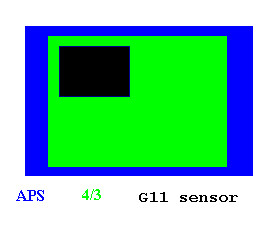
apsVS43rdsVSpsOk ... so lets look at the sizes of a DSLR (which is commonly APS sized) and a four thirds (oh, and recall please that the micro in micro four thirds is not that the sensor is micro, that would be daft. micro 43 uses a regular four thirds sensor. Its the camera that's micro) and a P&S or or even a high quality "prosumer" compact camera like a Canon G11 ...

you can see quickly that the 4/3rds and the APS are really the same size as each other (and of course it will come as no surprise that some of the DSLR's you may pick up ARE 4/3 cameras) and that in fact the sensor in a common P&S is ... well ... puny compared to the micro 4/3

so, lets look at some cameras ... I happen to like DPREVIEW as a good source of the basic data on cameras ... so lets take some examples from them:

is this a DSLR?


of course it is ... but this camera has a 4/3 sensor in it

So then is this a DSLR


of course it is ... it has a APS sensor in it which as you saw above is just about the same size as the 4/3 sensor.

so when you look at this camera:


remember that even though it looks like a compact camera it actually has the exact same size sensor as in the Olympus above ... if it looks small, thats what all the fuss is about micro 4/3 and what differentiates them from compacts.

So if you have the faintest interest in understanding your cameras, please, keep this in mind and do your self a favour and go over to Dpreview and do a little reading and start to grasp why these cameras are not the same as this one.

/rant

Tuesday, 9 March 2010

market driven

sounds so ideal doesn't it ... products being made according to what the market wants.

But what if the market doesn't have a bloody clue?

Cameras are a great example. There's no end of people out there (like me) suggesting what would be good in cameras, most of us seem to be saying similar sorts of things. However the market research people seem to be ignoring this and focusing on trawling the various forums given the state of the camera market.

Many years of observation in the real world in various countries over some years, I have grown to believe the market is rather naive and not know what the difference between a DSLR and a camera like the Powershot G10 is in the first place.

Further I am skeptical that people grasp what size the sensor is with comments made about micro 4/3 such as "it {micro 4/3} has a smaller sensor than a DSLR".

Aside from repeating mantra such as "bigger sensors give better IQ" I wonder if many of the people wandering around giving advice know what a sensor is?

When my wife bought an A520 Powershot Canon back in 2005 one of our acquaintances heard we'd bought a new camera. His first question was "how many pixels does it have".

Of course everyone now wants a DSLR (until they have to carry it round for long, then the honeymoon usually wears off), though few seem to actually know what that means. Given some of the questions I've seen and some of the answers its clear that noone grasps the most basic mechanical operations, so what hope have they got of getting to grips with the finer points in making an informed choice, let alone drive the market?

Sadly I think the market is going backwards. Most struggle with the concept that a lens can be change these days; having stood with my mouth open at comments such as:
  • I would never change a lens in the field
  • does it damage your camera to change the lens
  • you should avoid changing lenses frequently
  • changing lenses will get dust on the sensor, thats why zooms are better
  • you should get that done back at the camera dealer

and the list goes on...

I somehow think that over the years since the 35mm cameras like the OM / ME Super / AE-1 sorts of cameras that people have lost any concept of what goes on in a camera, and that those who came to the party late (starting in the digital age) by and large know even less.

So while I personally leaped on the G1 (getting perhaps the first one in Finland) and love the combination of compact / light weight / interchangeable lenses / great legacy lens operation / high image quality / high accuracy live view

but sadly I reckon its lost on the masses.

Just the other day at work a colleague with a large FD lens collection said that he was waiting for a digital camera that would work with his FD lenses. As a heavily invested and long time FD user he should have some concept of why his FD lenses don't work on later EOS cameras or other makes ... although he seemed surprised when I mentioned that I use OM lenses on my EOS and wondered how that could be.

I mentioned that I have the G1 and it can use the FD lenses with a simple mechanical adapter, that doesn't need an optic and gives you infinity focus. Even when I told him I'm doing just that he seemed to just say "oh, ok"

When I brought the camera in to work, with a pair of FD lenses and showed him how it works (under the guise of wanting to compare my FD 50 f1.4 on extension tubes to his FD 50 macro cos he's a macro person big time) he went "oh hey, it can use the FD lenses"

drippingMushroomFFS ... talk about Jesus guiding Thomases hands into the wounds

"and so now do you believe"

He was impressed with how well the diopter adjustment worked (he's a glasses wearer) and the magnify image on the swivel screen would be great for macro shots on the forest floor.

But at the end of the day he said "I think I'll wait till something comes along which allows me to use my FD lenses better"

In the face of this just how could you expect the market to drive anything?

Wednesday, 7 January 2009

choosing hiking cameras

prependum

shortly after writing this article I started using the Panasonic G1 camera. Where I had previously used my coolpix. The G1 is barely larger than the Coolpix, perhaps more fragile than the coolpix but weighs about the same. So as a packing camera its got the most important criteria ... low weight and high quality. Not only does the G1 exceed the image quality of any digital camera I've ever had its compatible with a wide vareity of lenses by adaptor. Please read about my experiences with this camera perhaps starting here.

If you enjoy taking your camera with you on hiking trips rather than hiking to take your camera gear somewhere then I'm sure that you've wondered just what camera should you take along. Of course you can carry a 6x9 film camera or even a 4x5 (that's inches folks) field camera, but it might be more of the case of taking your pack hiking to carry your camera.

(a curve ball for the open minded is an older "folder" 120 film camera like this. For around $100 used 20 megapixels is obtainable, used right I think you'll be amazed with the results ... if you can tolerate using film).

I'm personally always torn between the desire to carry less and the desire to have the best image quality. The major considerations are
  1. weight
  2. size
as a trade off with a useful and good picture quality camera.

After struggling with choices years ago in 35mm cameras I settled on a backpacking choice of a single light body with 24mm and 50mm lenses. I use Canon 35mm cameras and there were a number of good (and light) bodies to choose from. I could put my EOS 1000 into my backpack at a cost of only 500g and both my lenses (EF50 f1.8 = 190g and EF24 f2.4 = 270g) are light and produced great image quality.

Then along came digital and I started to use a compact Canon IXY 20 which weighing only around 200g with a lens opened my eyes to what compact should be. Images were totally fine for web and email (my entire site when I lived in Japan was done with compact digital) but lacked the ability to make decent prints when you had an "ohh that's nice" picture which begged to be printed to at least A4 size and put up on the wall.

Like this:


Luckily I had my 4x5 film camera on this day ... so I didn't have to make any compromise (well actually I planned to go there and take this photograph so it wasn't just an accident). So I was hooked on compact convenience but often needed more.

I eventually started using a Coolpix 5000, which gave me image quality nearly as good as low resolution scans of 35mm film and with compact and digital convenience. Eventually I bought a 10D and tried using my Canon EF lenses on that, but this left me a little disappointed as the sensor is not the same size as film resulting in different behavior of the lens (24mm is no longer wide).

When compared to the coolpix 5000 the 10D edges ahead in picture quality but only just!! Here is 2 segments from each (as discussed in the above article), can you see a clear distinction?


I can't see much, and unless you're printing right to the maximum size (32.5 x 24.4 cm in the case of the CP5000) you just won't see it in prints and you certainly won't see it when resizing for the WWW.

Now these are both older cameras (with the 10D being newer than the CP5000), todays cameras are better (just compare them in DPReview). The high quality compacts of today are better than the equivalent compacts of 2001, so this comparison (to the date of writing) remains consistent.

What hasn't changed much is the size relationships. So as long as you get a compact which produces quality images (and there are a some) then for a hiking camera you don't really stand to benefit all that much in images, but its the lump in your hand that you really see (and feel) the difference between a DSLR and a compact.

If you've been scouring DPReview for your comparisons between cameras you may be used to looking at their presentation style of images. So I've put a comparison of both cameras here in the photo to the right to make it clear just how much difference there is between a DSLR like the 10D and a compact.

They don't just look different, they feel different. Its not just numbers and pictures when you hold them in your hand.

Here is a DPReview-esque side by side view. While there is not an obvious difference in image quality there is rather an obvious one in size.

Not only does a DSLR like the 10D look humongous compared to the little 5000 it weighs nearly double too, around 800 VS 415 grams and still no lens!

Its at the point when you're packing your backpack that you ask yourself, will I prefer to carry the bulk or the compact?

I find that people seem to get lost in details when choosing their cameras. I regularly read many camera forums and see people getting caught up over issues like 10th of a second difference in 'shutter lag' or is the viewfinder really sharp and responsive. When really at the end of the day its the pictures which you will be looking at after the trip.

If your camera stays in the middle of your pack(because its annoying to stop and ferret it out) rather than taking pictures what good is it?

If you like to take landscape images there is a good chance that you'll also be someone who prefers wide angles. The CP5000 has an effective 28mm wide angle. So to get similar results on the 10D I need to use a lens which is 17mm. There are lighter lenses than my Tokina 12-24 lens (the one mounted on the 10D in the above image) which weighs more and is bigger than my CP5000 (but not all fit my 10D and either don't perform well or cost nearly a thousand bucks). At 560g it weighs more than my 24 + 50mm lenses combined and in my opinion is not as versatile bright or sharp.

So it seems that while DSLR cameras offer some advantages, once you're used to the paradigm shift of compact and fully functional cameras why would you want to take the boat anchor?

Keep in mind that before digital that 35mm was the best quality minature camera you could buy, that was the reason that it became so popular! Makers like Pentax (MX and LX series) and Olympus (OM series) made excellent 35mm SLR cameras which were so compact that they were barely larger than compact cameras. They had superb optics and were great photogrpahic tools. You don't realise how compact these cameras are until you hold one. I'd show you a comparison except mine was stolen a few years ago.

Anyway, in reality if you're not doing sports or some other specialized field of photography you simply don't need an SLR camera (and if you are, then leave that at home on hikes and take a good compact!). So if you can get past the "need" to have a DSLR for your hiking camera you need to look for a camera that has:
  • Good image quality (not just megapixels, often 6 is enough)
  • RAW image capability
  • compact size and weight
  • flexible viewfinder options
  • good camera controls (there are really only three: shutter, aperture and focus)
  • rugged design

Just to get you started here are a few cameras (of the many which) which I think fit the bill well

  • Nikon Coolpix 5000 (perhaps even the later P5000)
  • Canon G series compacts (5, 6, 7, 8, 9 10)
  • Sigma DP1 or 2 (so many professionals are praising the big high quality sensor in this one)
  • Ricoh GRII
  • perhaps soon the Micro 4/3's cameras which are smaller as they are not reflex cameras (the R in SLR).

When it comes to what makes a good digital camera for image quality one of the most important things (and least marketed) is the size of the sensor, if you read this article, I try to explain some of the issues around sensor sizes and cameras.

Lastly I'll suggest that if you want to consider getting a good 35mm compact camera to take along you will be surprised at what they can do to capture a scene on a sunny day. Compacts like the Olympus trip 35 and Nikon 35 Ti are very capable cameras and can produce images which can rival that from the DSLR (Ken Rockwell has even posted his findings). This is no exaggeration, as simple maths tells us that a 2400dpi scan of 35mm film (which is 36x24mm) is around 8 megapixels.

I'll leave you with an image taken by a friend of mine with an Olympus trip 35 in 1974. This shows just how well you can capture scenery with a compact camera.


enjoy

Monday, 21 April 2008

humidity and cameras

Most people don't realise that Fungus grows on camera lenses. For example this page explains this a little. Fungus attacks camera lenses in storage, and its growth is related to humidity. So people who are a little more in the know often speak of removing humidity with Silica Gel. I've found this is not a sound practice for anything longer term than a few weeks. Given the regularity of this discussion I thought I'd put a blog entry here about it.

Background

If it remains below 50% then fungal spores will not germinate (as far as I've read). Keeping it below 30% risks dammage to your camera as the lubricants and foams will start to 'dry' ... yes, even salt crystals have water in their stucture and you can get anhydrous salt powder.

I lived in a semi tropical area, I had already lost a lens to fungus (a 50mm Zukio macro) from my Olympus from fungus (I often visit rainforest in the rain). I had started a business and bought some lenses worth quite some thousands of dollars (IE: TS-E 24, 90, and some large format lenses). I thought it prudent to conduct investigations.

I have a friend in the army who is a munitions specialist and he has reported to me that for their purposes silica gel was insufficient to maintain correct humidity. So wondering what this translated to in a quantitative manner I did the following experiment (if you google this on google groups this you'll find the results published back in the late 2000 on rec.photo):

Humidity Experiment with Silica Gel

Materials
  • ~20g/100cc of Purple indicating silica gel
  • heavy duty "zip seal" plastic bag (1 liter capacity)
  • glass vegemite jar
  • electronic hygrometer

Method

I thought I would test using a common zip seal bag, since cameras are often placed in these for protection. Since the camera in the bag occupies some space in the bag (and prevent the bag from being slim or vacuum sealed (if they indeed can be), I placed my sample of silica gel into a (lidless) glass jar with an electronic hygrometer hopefully replicating storing a 35mm camera lens in the bag.

The bag was only containing air from the room, no other gases were placed into the bag (such as gas from cylinder of nitrogen).

The bag was then zip sealed. The jar was put on its side, so that the top was not blocked further by the plastic and the hygrometer was visible with out disturbing the setup for making observations.

Note: The hygrometer displays LL% when out of range at the low end of humidity (which was cited as ~30%RH by the maker) and HH% when over 90%.
raw data

23-Mar-00 68% 6:38:00 PM experiment started
23-Mar-00 41% 8:52 PM
24-Mar-00 LL % {very rapid absorption depletion of humidity in bat}
25-Mar-00 LL% {already seems to be loosing the colour in the crystals, some are pink]
26-Mar-00 LL% {more of the crystals seem to be pale pink}
27-Mar-00 LL% {more of the crystals seem to be pale}
29-Mar-00 32% {most of the crystals are pink}
31-Mar-00 39% {more seem pale, a few are still dark}
02-Apr-00 43% {no apparent change in the crystals}
03-Apr-00 45%
04-Apr-00 45%
05-Apr-00 48%
06-Apr-00 50%
09-Apr-00 52%
10-Apr-00 52%
11-Apr-00 54%
13-Apr-00 57% {almost all crystals are depleted, about 9 remain as pale purple}
15-Apr-00 60%
17-Apr-00 64%
18-Apr-00 66%
24-Apr-00 64%
27-Apr-00 73%
29-Apr-00 76%
experiment concluded duration = 22 days.

graphically:


Figure 1: humidity measurements

Conslusion

As you can see, even in a small zip sealed bag the humidity rose to a point where the silica gel was failing to cope with humidity migration across the membrane of the plastic, and simply maintaining a constant level in the bags environment. Since silica gel can also release the humidity it then becomes a 'buffer' keeping the humidity reasonably constant (perfect for those fungii and molds) when the outside ambient humidity goes high. Typically this goes high in the night (as the air cools) and low in the day (as the air heats up).

Storing stuff inside your house (often cooler than outside) in a tropical area will ensure a nice humid atmosphere for your fungi. Meaning camera bags placed in cupboards are the worst locations.

Based on this I constructed my own humidity cabinet from a peliter effect device (commonly used in electric 'car fridge' systems) to condense the air and drain it out of the cabinet.


My power supply is a $15 cheapie 8 amp 12V car battery charger and a $20 12V GEL cell (to even it all out). I then ran a simple 24 hour timer circuit (like used to turn lamps on and off) to shut off the entire thing at different times of the day (used a relay to kick in on the 12V side of the car battery charger to shut off the power from battery to Peltier too). I made the back wall of the cabinet 5mm ply and cut out a shape to take the peltier in the middle. This puts one side of the heat sink inside (that'll be the cold side) and the other outside.

You'll need to fiddle with heat sinks to get the right efficiency, but I settled on this pair:
inside and outside

Then I made a simple catch tray (for the drips) out of a cut down plastic milk container and ran a bit of aquarium pipe out of the cabinet to drain it. Careful with this as in my summers I get about 500ml a day on a good humid day!

Naturally you need to be a bit handy, and have some electronics knowledge too. Of course you could buy one of the pre made ones.

hope this helps