Showing posts with label economic thoughts. Show all posts

Monday, 27 July 2026

Exonomics

I looked, I couldn't find this word, so I'm making it up

Exonomics: the study of everything that isn't economic or the use of bullshit theory to use "voodoo economics" to cheat you out of what's yours.

So, good old "Trickle Down" Economics is a good example of Exonomics


It could include:

External economics: the study of how outside factors (environmental, social, political systems) influence economic behavior, or how economic activity affects external systems.

Economics of the external: the economics of things outside traditional markets (like natural resources, social relationships, or intangible goods)

Economics of externalities: specifically on anything that's external (like carbon dioxide release from burning fossile fuels, external costs or benefits not reflected in market prices (like pollution or innovation spillovers)

Of course working out how to cost this in the corporate world is a known vexed problem.


Friday, 8 August 2014

a Black Box Approach (for HiFi and Cameras too)

I'm an engineering kind of guy and actually have a background in Sound Engineering; accordingly my choice in stereo has been influenced by a modular approach and the ability to tweak sounds (at the very least to match my room).

So it was quite a surprise to me when I bought these Bluetooth speakers at just how bloody good they were.

In fact they are so damn good that I when I left Finland (leaving many household items in storage) I posted these back to Australia because I wanted to side by side them with my "big" stereo to "see" if they were actually better (if lower power).

Well they are.

There is an accuracy and clarity of the bass reproduction which is genuinely amazing (for such sized drivers) and combined with an accuracy of high frequency rendition that left me surprised.

Yet these humble little speakers are as simple as you can possibly imagine. Use is simply a matter of plug them in, turn them on and pair your phone with it. Then your phone (or tablet) can then also act as your music center as well as all the other things it currently does.

The system has a minimal approach of having its amplifier built into the "main" speaker and then just connects to the other speaker with a cable (strangely to me via an RCA plug).

It has a tuned "reflex" port on the back to effect its low frequency responce ...


and you can see that it has only 3 (totally different thus not easily confused) connectors:
  • power
  • aux in
  • the left speaker output
On the top the controls are in keeping with the simple approach:


Indeed the only complexity is in the fact that the input button doubles as the on / off button.

That this system produces such quality sound is actually in my opinion related to the fact that the engineers could take total control of the system. They knew the amp, they knew the box, they knew drivers and thus they could tune the shitter out of it with Eq curves between the inputs and the drivers as well as tuned ports to match the entire thing perfectly.

And they have succeeded!

In fact this is not a first time for me to see this, decades ago in the 70's Phillips produced a similar system, which had integration of amps and speakers, you just jacked in your Tape, Phono and Tuner. Naturally it failed because back then HiFi was the realm of the fiddler (well and HiFi still is). However today more and more people just want simplicity and quality (the HiFi crowd poohoo this).

Perfect timing for this speaker system if you ask me.

Cameras?

Well unsurprisingly for my blog this leads me back into cameras (my other worldly enthusiasm) and the rumors of a micro43 fixed lens camera. WoW ... now that to me would be very interesting.

We already know how good such integrated black box (user can't alter the system) approach can be, cameras like the Sony RX1 are testimony on how by accepting a black box approach we can have the best of all worlds. I think that this image of a Leica M8 beside the Sony demonstrates ably the advantage of the philosophy.


Sure a 35mm f2 lens is not for everyone (and you can't change it) but its a really good general purpose size with enormous potential for image control. That its coupled in a compact yet full frame camera is stunning enough. However its clear that the quality of this camera system (the Sony) produces exceptional results.

Another example of this sort of "black box" synergy of tuned components exceeding the capacity of "system approach" of mix n match is found in the Sigma DP2.

Granted its not a camera for everyone, but if you take a moment to read this post (try Google translate if you need the words in English). To me that the Sigma DP2 is indeed so bloody close to a top range full frame camera, and a top range medium format camera is testimony on how effective this approach can be. Especially when you consider prices:
  • Sigma DP2 is about €860
  • Sony a7 is about €2000
  • Leica S is about €19,900
yet looking at the images presented there there is nothing like that level of difference in quality.

The same can be said of my speakers, as while they cost  far more than many Bluetooth speakers, they cost far less than even just my Amplifier.

Food for thought isn't it.

So, perhaps its time to consider the black box approach in your outfit too?

PS

Since Steve asked a question I thought that for the sake of the interested I'd add some more information on the speakers.

The speakers are Pioneer XW-BTS5-W (I think the last W is related to White, as I see the black ones are -B). I'm not sure if they are still current models or if there is an equivalent as most Bluetooth stuff lately is expensive "single brick" style rubbish.

When I turn them off (with music playing) my phone pauses, to resume when I turn them back on again. Also when an incoming call occurs they turn off automatically and replace the music with the phone ring tones. They do not carry the phone call or have a mic (as some systems do) When the call is over it gently returns the volume to where it was.

If I leave my house (with the phone playing music) the phone pauses (when its worked out its lost signal) and if I return soon enough it reconnects and resumes playing. If I stay away too long the speakers 'shut down' in a standby mode and I have to turn them on again (whereupon the music resumes).

The speakers do not attempt to "carry" the phone call in any way, they have no mic on them to pickup my voice, so they are not (like some) a hands free alternative. I believe this is because the makers intended the speakers to be focused on delivering quality Audio around the room / apartment. My living room is 4 x 8 Meters and they provide a good music listening level but would not be suitable for "Rock the Roof" parties (where you're going to need way more Watts and much bigger bass drivers).

HTH

Wednesday, 30 July 2014

utterly useless metrics

One of the things which gets up my nose is the use of metrics to demonstrate something which is in fact, not actually true and just a wish. One of these that is close to my situation at the moment is the "new jobs" count which is supposed to guide our feelings on how the economy is improving.

Its just bullshit ... for instance:


Which was encouraging ... until I scrolled down the list and saw that actually saw that three of these are without doubt the same job being handled by 3 different placement agencies (headhunters).


So, clearly, the recovery is well underway. Certainly from the viewpoint of King Wang

Wednesday, 16 July 2014

Bar ends on my round town MTB

There is of course no end to the variety of handle bar grips on bikes. However I get tired of them going 'mankey' with sweat and humidity around this neck of the woods, so I thought I would try something different this time.


I got some padded road bike corking tape off eBay for about $4 posted. It came in two lengths (left and right side right) and I used about a third of one of the lengths to fit up my bar ends.

I secured it with a little bit of self anealing silicon tape (called tommy tape, used about 6cm of that) and they work great.

Cycling was meant to be cheap.

Like me ;-)

Friday, 14 February 2014

Gold bugs bug me

As it happens I have an amount of my savings (the wanky name is 'investment portfolio') in Gold. I keep an eye on the prices (out of interest) but I'm not really able to buy right now (lets not go into that, but here is a good start for you).

Today I was reading about Gold rocketing up ... "yeah yeah" I thought. Looking at the 30Day picture its a sky rocket


WOW ... go girl go (say the stokers and the fools). Shit like "these new heights are a testing point", "haven't been seen since..." (... last time)

To quote from Magic Roundabout "boing" said Zebedee...

Zooming back out to the last year ... reveals a different picture


where todays "bull run" is just a little piddle. What is wrong with these wankers? Oh ... right ... King Wang doesn't even have one eye. Get a grip folks (and no, on the facts, not your oldfella)

They say you catch more people with sugar than vinegar. Bullshit seems to work too.

The fact is far more claim to predict than can. If you look at the above graph you can find just as many "up turns" that went nowhere as you'll find downturns (well more downturns really). If you can predict the future then good for you. Myself, I'm just in for the long haul and sell if I need to (like because of life issues).

Monday, 18 November 2013

Tulip bulbs and Bitcoins

Financial boom bust cycles are interesting stuff (for those not entrapped in them), there is always speculation over what the next one will be and when it will pop. They seem to have a lot in common with Ponzi schemes, but of course everyone denies that till its 'hindsight'.

I was browsing over at zerohedge and came across this article which discusses the value of Bitcoin going over the US$500 mark.

The article discusses the merits of this new 'financial instrument' and how its going to be going up financially speaking. They mention some interesting points including that the Chinese can now buy real estate with Bitcoin (see this reference).

Naturally there is all manner of weird-arsed comparisons between Bitcoin and gold (the metal) and justifications on how Bitcoin is undervalued compared to gold. Bitcoin proponents suggest that its a solid reliable private currency, and its got a great future.

Well what has all this got to do with Tulips?

Well Tulips have come to represent a major financial "bubble". Some time in the 1630's tulip prices went off the scale, it is reported on Wikipedia is this "By 1635, a sale of 40 bulbs for 100,000 florins was recorded. By way of comparison a skilled laborer might earn 150 florins a year".The crash for tulips came when sellers found that buyers weren't paying their desired prices (and it has been suggested that a change in the laws regarding tulip futures contracts had some effect).

It could be argued that Bitcoin is taking off as the international and electronic private currency. But unlike many other private currencies, bitcoin is not underwritten with anything. In a historical study of "unregulated banking systems in nine different countries during the nineteenth century: Australia, Canada, Colombia, China, France, Ireland, Scotland, Switzerland, and the United States" things went well for private currencies. But a significant point in that historical examination of private currencies (see this reference) was that:
A competitive market compels unregulated banks to fix the value of their deposit and note liabilities in terms of the economy’s basic money, by offering redeemability at par (full face value) in basic money. In the past, the basic money was gold or silver coins.
So it seems that people could trust these private currencies because they were backed by the financial institution and redeemable.My understanding is that bitcoin is not underwritten by anything or redeemable for anything except good and or services and trades on the free market. Its value is very much set by the market view of its worth.

Bitcoin is viewed as safe and the technology of it prevents fraud. Sounds good...

So my comparison between Bitcoin and Tulips starts with this post that BitCoin is Broken by a pair of IT academics who have identifed flaws in the security of Bitcoin. They outline a method where:
a minority group of miners can obtain revenues in excess of their fair share, and grow in number until they reach a majority. When this point is reached, the Bitcoin value-proposition collapses: the currency comes under the control of a single entity; it is no longer decentralized; the controlling entity can determine who participates in mining and which transactions are committed, and can even roll back transactions at will.
Nice... of course mining bitcoins takes some serious computing investment (much as does commercial large scale mining in the ground), which is commonly in the realm of BIG governments (you know, like the Chinese or the USA or say a conglomerate of EU nations).

So is this a new Ponzi Scheme? After all Bitcoin is only worth what the market thinks its worth. If the market felt that a Government was in such a control position the market may just flee the system.

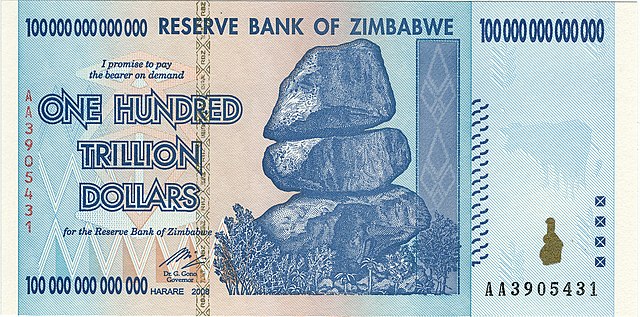
I reckon that there is money to be made in buying and selling Bitcoin (just as there is with FX trading) if you have the stomach for it, but ... don't get caught out with the digital equivalent of the Zimbabwe Dollar.


cos in my view, when the music stops you will want to have already sold you seat to someone else. Who knows how far Bitcoin will go up ... I'm no financial adviser, but here is some music to listen to while planning your Bitcoin investment

Tuesday, 24 July 2012

employment and unemployment over time

Wow


i just want to re-tweet this great tweet by Matt Cowgill (and put the image here incase it falls off twitter).

Monday, 23 July 2012

something I never understood

back when there was the GFC in 2008 I wondered why the USD went higher and the Australian Dollar (which was less exposed) took a hammering?

Seen in context here some years later it still seems odd


that the EURO continued to slide against  the USD after 2009 makes sense to me.

I notice that the Australian dollar is now more or less back on track to the rate of change it would seem to have been on before the GFC.

People say the AUD is overvalued, perhaps it is ... but isn't the USD too?

Wednesday, 27 June 2012

up up and away ...

Well I got a notice in the mail today from the power company letting me know that both parts of my power bill are going up. That would be the 'regular supply' and my 'off peak' (Tariff 33)

What is most interesting however is that the off peak power is raising to such an amount as to be unattractive. Clearly they want to drive people away from 'off peak'
Which is interesting as I'd say that the majority of off peak setups on this here in Queensland will be hot water systems.
I can only guess that the extra 'feed into the grid' of rooftop solar (no its not stored) has meant that peak management is harder now (either that or its a money grab)
I've plotted the ratio of the prices on this graph to make that clearer, but where it was earlier nearly half price for off peak power (and on Tarrif 33 the energy supplier decides even when you get that energy), it is now only about 25% cheaper than regular power which I can use as I choose and can rely on it being there.

I'm not sure if I've ever lived anywhere else where we see power prices doubling in such a short time. I guess this is one of those changes we aren't going to see with the Carbon Tax.

Hmm ... wonder how I can work smarter on this one?

Tuesday, 5 June 2012

watching things grow - reading numbers

Strangely I often see data representing long term growth represented linearly. Personally I think this is good for 'dramtics' but I don't think it really gives a clear view of what's happening over time.

So I thought I'd toss in a few thoughts on that topic while I wait for an SCP to complete....

Assuming we start with 1 and add 1 to it we get a linear growth of 1, 2,  3, 4 ... which we see below in the figure. I've put in two columns where growth is adding 1 each time and the other where growth is adding 10% each time. When you have 1 adding 1 is really doubling your holdings, but adding 10% isn't.


But when you've got 20 adding 1 is only adding 1 and not really much. I mean seriously if you were out on the town and had twenty bucks adding another buck won't buy you much more.

So 'linear growth' starts to be tricky to comprehend when you get a few cycles into the analysis. In the plot above I've only looked at 30 cycles of of 'activity' and already on the log plot the line of 'linear growth' is seeming to show that reducing importance of giving you a buck when you've got thirty already. The Log plot is however showing a more 'linear' view of your growth ... which is of course because our growth is done in percentages ... which is what a logarithm is all about.

This 'aspect' can be seen clearly when we look over a longer time scale, and adding a buck to what you have makes bugger all difference (but adding 10% is still adding 10%).
 

So this is why financial analysis should make better use of maths tools to express issues. Assmuming the idea is to communicate something rather than obsfucate something

Wednesday, 16 May 2012

gold in the market context

I'm no economist or trader, but I was looking at some graphs today and wondering.

Looking at gold trends for available and worthwhile data I see some interesting historical matches


the first blue rectangle is where the USA phased out its relationship with gold.

  • By 1971, the money supply had increased by 10%
  • inflation-wary West Germany was the first member country to unilaterally leave the Bretton Woods system [the agreement to allow the USA to be the central money for world trade], unwilling to devalue the Deutsche Mark in order to prop up the dollar.
  • Switzerland  redeemed $50 million of paper for gold in July.
  • France, repeatedly made aggressive demands, and acquired $191 million in gold, further depleting the gold reserves of the U.S.
  • By March 1976, the world's major currencies were floating
So this led to people purchasing gold (and increasing demand on a highly limited resource) pushing prices up.

The next area which is interesting to observe is the period between 1990 and 1999 when gold started to fall over a sustained period with no spikes. Interestingly this corresponds to the period of the dot com (.com) revolution where people were convinced you could make money from investing in software and communications. Its interesting to note that Microsoft did not register their own domain till 1991

By 2000 this had settled down and people were returning to examine other avenues of investment / money safe haven.

By 2004 it had become reasonably clear that the USA was in financial and military trouble and was not actually winning any wars on terror or gaining traction against those who attacked them on Sept 11 2001

Looking at the falls of the last 30 days in broader context it seems that the rise up to $1800 was just a spike. Its interesting to note that all spikes have eventually been met by the line of average growth in time.


The olde rule of thumb of "buy on the lows" would seem to be the best strategy still.

So with gold "falling" now in the short term the question in my mind is where is the bottom at the moment to pick the best time for buying before the next raise?

PS

Some other quick thoughts came to mind: first if you plot the changes in a LOG curve you get a much more stable looking thing from the early 70's till now


Now if we add to that the DOW in the same manner


It would seem that things have been pretty quiet over at the DOW house since about 2000. Strange that gold has 'gone up' a bit from about the time that the DOW has gone quiet.

Wednesday, 11 April 2012

we're not the customers anymore

In a recent conversation with a fellow on a forum it was pointed out to me that the reason companies like Nokia take no notice of what people want is because of the obvious:
we're not the customer anymore, the Telco's are
Seems strange, but the more I think about it its clear. People don't go to shop for phones, they go to a telco to see what they have on what plans and sign up.

The telco then tells Nokia or HTC what it is they want to be offering to their customers.

Now that I see it this way, its clear that since people are no longer looking to purchase a phone. So no matter what experts or advanced users or even small businesses want to roll out to their sales people, the phone companies don't make what people want; they make what phone companies want.

I think that iPhone is the only exception to this ... which is perhaps why the Telcos often charge more for those on a plan.

Saturday, 31 March 2012

financial relativity

If you've ever sat on a train at a station you may have noticed sometimes that its hard to know if the train beside you is leaving or your train is leaving (well ok, not in Australia where trains never depart so smoothly).

People who look around for investments occasionally point to Gold as a good investment option (some people call them gold nuts). Its easy to see why when you look at the basic data (say on goldprice.org or kitco) as it seems that Gold has gone high lately.


Well an important question to ask yourself here is:
"has gold gone high or has money gone low".

Its a difficult question to answer and I reckon that it can only be done by comparing things relatively. After all, money "floats" these days and its creation is regulated by the government.

If you're a property owner in Australia (and certainly in Queensland) you get occasional notifications of the value of your property from a State Government agency (the name varies from state to state and often from year to year). This seems like a nice service, but in essence its a harbinger of taxation as land value is used as one of the basis of taxation.

I just got my notice the other day and noticed that our value had gone down (again). I pulled out some previous notices and found something interesting over the period from 2001 to now.


First thing which was obvious was that between 2001 and 2004 the value of my land doubled. Thankfully (for my local government taxes) this trend settled down and has now started to reverse.

Got to love all that property speculation back in that period. People got locked into loans over 20 years and the only real beneficiary seems to have been the banks and the real-estate brokers.

Now lets look at my property with respect to the price of Gold.


I've put them in separate scales for ease of comparison, but you can see that property prices peaked at about 2007 (no data for 2008 I'm sorry) and interestingly Gold kept climbing.

To a casual eye this would tend to suggest that Gold was a better investment. There is another interesting view. If we consider gold itself as a currency of exchange (as would have money been if it was not floating and was still pinned to Gold) what would be the house prices in gold: how much gold would you need to buy a my land? This graph is perhaps a little confusing as the Gold columns show how many Oz are needed to buy while the Land Valuation column is just the money. So the amount of gold needed to buy my land has actually gone down between 2001 and 2012.


So in 2001 it was just over 150 Troy Oz to buy my land and in 2011 it returned to just over 150 Troy Oz of gold to buy my land.

So it would seem that if we are trading commodity for commodity that the value of my property has remained stable from start to end of that period and that only the relative exchange in the middle period has changed.

There could be quite some argument as to just why this happened but looking at the curves on those trend lines, the value of property rose faster than that of gold (seen in the price of property vs gold earlier) and that gold has just "caught up" as people realised that one commodity was moving faster in value than another.

You will note that in the 2nd figure I only have data to 2011, while in the 3rd I've inserted a value for 2012 in property value. I don't actually have valuation data for 2012 so I 'extrapolated it' which is of course guess work. I do have data for Gold in 2012 (like spot prices right now) so we can sort of see something.

If property prices do not stabilise (or go down) then we'll see that the price of real estate was over valued (based on the other trading commodity of Gold) in the period from 2001 to now. If it goes down further we will know that land was really over valued in that period.

Fellow blogger Bullion Barron has an analysis of this topic in full house prices over a longer period over here. Where he produces this graph:


Suggesting that whole house land prices were well under this valuation being less than 100 Troy Oz back in the 1980's (when Gold was just recently uncoupled from the US Dollar and that the Australian Dollar was at record highs against the US Dollar).

Makes me wonder how much further it has to fall yet. Perhaps my "estimation" on my land value is too low, and rather than staying static (as I 'estimated') it will continue to fall. In that case even with modest rises in the price of Gold we could see house and land back in the 1980's value with respect to Gold.

So getting back to the original question (is Gold an investment), I don't think it is. You don't easily make money out if it (which is the purpose of an investment) but it sure seems a safer hedge than money in the bank ... or bricks and mortar (well often pine and gyproc these days anyway).

Tuesday, 7 February 2012

The Church of Economics

One of the things which differentiates Science from Religion is Belief or Faith. In a religion everyone has to simply 'believe' what they are told, questioning the doctrine is not well regarded.

Science on the other hand is built on questioning. The demands that theory can be demonstrated, and that evidence is key.

I reckon that the prevailing paradigm of "Economics" is more one of belief than one of science.

Today I read that retail sales were the worst since the eighties. Well its interesting to read the fine print on that:

Annual retail sales grew 2.4 per cent in 2011, easing from a 2.5 per cent rise in 2010. Last year’s increase was the weakest since 1984

Ok, so we actually had GROWTH and still this isn't good enough ... WTF?

Physicists are among the types of people who are trained in mathematics while (it would seem) that many Economists are not (I mean look at their graphs for a start, no scales often no axes). Reading the works on this topic by a physics person supports my fundamental view that growth can't go on forever.

He writes some interesting things, much of which is perhaps difficult to grasp if you didn't pay attention at school and can't read a graph (no, its not just a pretty picture) and you don't get what the difference is between Log scales and Linear ones.

So retail depends on "growth", but is this growth linear or log in nature? It would seem that to satisfy the economists it must be logarithmic. That's nigh on impossible. Some quotes from that above article:

Let’s say we lock in today’s 5% growth and make it linear, so that we increase by a fixed absolute amount every year—not by a fixed fraction of that year’s level. We would then double in 20 years, and in a century would be five times bigger (as opposed to 132 times bigger under exponential 5% growth). But after just 20 years, the fractional growth rate is 2.5%, and after a century, it’s 1%. So linear growth starves the economic beast, and would force us to abandon our current debt-based financial system of interest and loans.

Seems rational and easy to grasp. So how would we get a log growth? Well the same author makes good points in discussing what is wrong with the theory of sustained logarithmic growth here.

Looking at the past shows us that for some time (since the Industrial revolution perhaps) we have come to expect that we can always just get more more more. However looking into the past is not really a good way to identify our future.

Moore's law is the classic example. The under educated and mis-informed use it to 'predict' that every year we'll get more from less. Moore himself has identified that this can't go on indefinitely. We are actually starting to see the evidence to support this.

So perhaps we should start looking around for alternative economic approaches?

Look at it another way: Physicists and Engineers are the ones who imagined and designed everything we have which works that man has made. Economists are today the ones telling you that saving money is a bad thing, debt is leaverage and consume more because that's good for everyone.

I know which set of people has made things which seem to work.

I'll leave you with a quote from Moore himself. Perhaps it may give you pause for your religious belief in the "Dogma of Infinite Growth"

On a more sobering note, Moore, who has donated millions to save forests and other nature areas around the world, said that humans are definitely taking a toll on the environment.

"We are the last generation to have any wild places on earth," he said.


Fortunately there is another school of thought emerging in Economics, but that paradigm shift has yet to gain momentum.

Wednesday, 18 January 2012

land prices

Land prices, it has to have an effect on business.

Keep seeing this on the side of the M1 on my way home.


As its just a flat section of ground with some grass on it, it seems to be be "unimproved" to me. So based on this price its a bit under double what my "unimproved land" value is in the middle of Southport.

As businesses will just pass on costs to consumers is it any wonder that more and more businesses are moving out of the country?

Tuesday, 8 November 2011

economic booms

boom - its even synonymous with explosion isn't it.

Explosions are often about short destructive forces.

Combustion is about burning stuff, things like the "internal combustion engine" come to mind where small amounts of the stuff is burnt at a time to produce ongoing energy from a small amount of fuel.


Efficient engineering can get excellent amounts of useful energy from a small amount of fuel. You can drive a modern car for 20Km on a litre of fuel ...


Or the same litre of fuel can be used to make a boom in something like a molotov cocktail


Which makes an effective cheap weapon to get your way, but has mainly only destruction as its outcome.


So why is any responsible Government trying to facilitate a resources boom in Australia rather than turn this into an engine for sustainable development for years to come? The ore will always be needed and likely as not the coal too.

I think that the only answer that makes sense here is that the Government is not behaving in a responsible manner and is acting like a kid with money burning a hole in its pocket.

Perhaps the electorate are too ... so why don't we tell our MP's to stop this short sighted boom stuff and start making wealth for our nation in a sustainable manner?

Tuesday, 18 October 2011

people have too much money

I know they'll scream that this is wrong, but how else can you explain that someone would be willing to pay $40,000 for a car and then accept loosing over $20,000 in three years?


no wonder people don't give a shit about the price of fuel, depreciation is so costly as to make fuel irrelevant.

There's something really wrong with this picture

Tuesday, 11 October 2011

peak life expectancy

I'm sorry if this post is a little incoherent, but my point is that instead of helping ourselves we're also hurting ourselves with our modern views of what is good health and how we should live.

A fellow blogger posted some time ago about the topic of life expectancy and raised the notion that in developed nations in some places it was lowering, perhaps for the first time. He called his article "Peak Life Expectancy". For most of human history we have struggled to make our lives better, I would wonder if the revelation that life expectancy is now lowering in places where everyone is "healthy" is not some sort of indicator of sustainable development?

I happen to agree with much of what Cameron wrote there and cogitation on that (at least subconsciously) forms the point of this post. My feeling (based on what I see) is that from now its quite likely that we're going to start going backwards, trending towards being less strong and healthy in age and perhaps not living as long.

I have struggled with a notion that while we are trying to make things better, perhaps we have failed to sit back and observe that things are quite good and perhaps we can start to take advantage of our hard earned gains. A point which seems to be lost on people is the need to build capacity or a reservoir of strength which to draw upon as we get older.

The author Frank Herbert made the point in his novel Dune that people flourished in adversity. History seems to show also that empires which were built on tough conquest failed when the society fell into indolence and decadence.

My dad is in his 80's and he's a tough old bastard. In his younger days he worked in bloody tough conditions, doing such things as out at sea whaling or commercial fishing. He grew up in a tough time and during his life he worked hard. Its no wonder he's a strong tough guy because a lesser man would probably have been dead.

Today almost noone works hard, plays sport or even does much physical activity in the west.

Why? well our economies have been transformed to "service sector" and if anything we obsess about workplace health and safety like a pack of worried nannies. Fewer people get enough exercise because we are too worried to walk or ride a bicycle anywhere (and perhaps even rightly too). We drive more and more and of course this effects our health in poor air quality as well as poor physical health.

People wouldn't consider riding a bike 12Km to work, but they'll spend some hundreds of dollars for a gym membership (the wealthy ones) where they sit on an exersize bike and ride 12Km. The non wealthy ones either buy crap exersize stuff off TV or just watch TV.

People "slim down" by diets rather than genuine exercise (which also builds strength) often robbing themselves of core strength. Medical science is just starting to catch on to this with recognition that osteoporosis is actually simply prevented by simple stuff like aerobics, weight bearing, and resistance exercises.

When my dad (or even I) was young there was nowhere near the amounts of food intolerance or various allergies as we have now. People speak of virtual "epidemics" of allergy today and interestingly much of the evidence is pointing to things like:
  • us being too clean (not properly building and using our immune systems)
  • use of too many new (newly synthesized) chemical cocktails for general life
  • over exposure to a host of new toxins
As one with a history of tertiary study in microbiology and biochemistry I will say that the overwhelming majority of benefits to humanity come from the most basic of medical development. Simple stuff like hygiene, washing food, not shitting in your water supply, access to good nutrition has been responsible for the greatest improvements in life expectancy and quality of life.

So while stuff like MRI is truly fantastic stuff, but you need to keep in perspective that bang for buck it has done far far less for human health than washing your food and keeping ourselves away from parasites (or this guy).

Tuesday, 4 October 2011

growth rates vs consumption rates

Back when I was doing my Masters research I wanted to address the question (among others) of "as our population has expanded on the Gold Coast have we also consumed more water per person rather than just consuming more water?"

My research indicated that the increase was only marginal, which went against the accepted view in the community that we were using more water per person. The graph here shows population as series one and the water extracted divided among the population. Its irregularity is perhaps a source of research but I'm of the feeling that it would be explainable by the rubbery accuracy of data by GCW.

None the less I think this demonstrates that we are not actually consuming more water per person, although as the population goes up we are consuming more water as a community.

At the moment I would be interested to know however about the impact of the population growth on our use / need for energy? Is it like water or not? For instance. I find myself driving further and longer to get to work these days. I live in a city where there are essentially no meaningful jobs (the Gold Coast), and as a result commute to another city (Logan) for my work. Back in 2004 it used to be to Brisbane, so perhaps I'm not so badly off.

However I notice that more and more people are joining this same road so that it is now almost always totally at capacity.

Australia is rapidly urbanising, with this page suggesting that the urbanisation rate is 1.2% and that the population growth rates are about 2.1%.

I'm not sure if this results in more or less efficient use of energy. My gut feeling is that its more, but its a subject I would like to have time to research properly.

This page suggests that Australia has been growing its energy consumption rates at about 2.3% which is slightly higher than the population growth rate. The data however is only until 2005 so I'd be interested to learn what it is in the last 5 years.

I did some back of the envelope calculations the other day and came up with the figure that we use about half a million liters of petrol on the freeway between springwood and the northern end of the gold coast every day just for commuting to work.

So this has me wondering if we're ramping up or its just population growth. That quick back of the envelope mentioned above gave me a figure of around 5,300 cars traveling on the highway between my work and home, which is a scary number and WAY more than it was just 5 years ago. I looked up stats from data averaged over the period 2008 to 2010 and found that its actually less than my calculation but pretty close.


It gets mighty busy and fast from 5am and ramps back at 6pm. I can say from my personal experience that this isn't how it is now with it still being busy in the 8pm segment and way busier on the weekends till much later.

Either way I think its not a good sign.

Monday, 19 September 2011

can't add up

Got my power bill today and with it came some "news letter" filled with helpful ideas on which products I should spend money on to save money.

Wow, that's so helpful. Leading the helpful advice was the page

Cutting Down Can Add Up


This suggested that:
according to the 2011 Origin Index research* [ya gotta love those stars] 63% of Australians look to conserve energy, but around half of the country don't understand how the basics can help reduce power consumption.


So they're saying we're too thick to work out how to save energy ... well after speaking to people for some years and asking stuff like how much energy does your X use or how much do you pay per kWh for power, I can't say I doubt their research.

However they do precious little to help this building of capacity within the community and instead foist up some confusion and (when you go to their site) outright misinformation by implication.

Lets start at the bottom of this segment as its my favorite, the "solar heat pump".

Now if you go to their website they list the Dux Airoheat heat pump under solar systems, and here in this ad they imply that linkage by

1) putting it on the same page as the Dux Solar Hot Water
2) criteria such as "no solar panels required" and "a great solution where your roof shading does not permit solar hot water"

Well guess what ... no wonder it doesn't need panels BECAUSE ITS NOT SOLAR

It is infact just an electric system, one which uses the principle of a Sterling Engine, which is also used in many reverse cycle air conditioner units.

The only way (and man is it remote) that this system can faintly be called solar is that if you live somewhere hot then that heat will help to drive the system in heating the water up. Of course if you live somewhere hot its likely to be caused by the sunshine, so I guess in some way it could be solar. Strangely it seems to qualify for the STC solar rebate ...

right ... good one. I would be quite simply stunned if you can find out such a simple description of that system as I've just given. I can only surmise that the reason for that is if you put enough bullshit around something you'll perhaps get the punters to believe in it.

Now the next point is costs.

Now lets assume that this system uses no power (unlikely if not impossible) at the pay off of $145 per month (assuming you get the rebates) it will take ten years to recover the costs of this system compared to just the power bill that my regular hot water system uses on off-peak power.

My off-peak hotwater typically 133 kWh of energy per month, even at the current charge for that (11c per kWh) I only pay $16 per month.

Next we need to look at something else ... heat. To maximise the effectiveness of this technology you need to be heating the water when the air is at its hottest.

Uhm, that would be during the day right? Well surprise surprise off-peak power is normally supplied at night ... which will lessen the effectiveness of it.

Then there is the noise, if you read into it more these systems use a fan (just like air conditioners) which generate noise. A bit of googling around will show you that there are a number of people who have had to remove their system because neighbors complained about the noise from the fan. So just be careful in tight urban areas where houses are built occupying 90% of the land area.

The real solar system


I notice that you have to cough up $5000 for the system and while you may feel warm and fuzzy about the energy savings (and the reduction of drain on the power grid) you'll notice the little bit I marked in red: "electric boosted solar hot water" ... yep, you'll be paying some money for those cloudy or rainy days ... so just like my solar floor heating, its only part of the answer.

I hope none of this breaks down or blows up in the decades it takes to brake even ...

So I guess that its lucky for Origin that customers can't add up or they'd be wondering why the hell would I spend this money on something like that?