Showing posts with label population. Show all posts

Thursday, 23 April 2026

Its the Wrong Question

Recently the Australiann Financial Review ran a piece (link here) about the Australian population, I found it very narrow in historical scope and perhaps intending to further a government policy with no discussion about the usefulness of that policy with respect to the interests of Australian People and effects on our way of life. 

Their question seems to be "why do we (the public) think there is too much growth". This is to me the wrong question, the question we really need to ask is "why are they doing it to us".  

Much is said (in that AFR piece above) that attempts to persuade you that the water temperature here in "Pot Australia" is not too hot by comparing it only with how hot it was last year and its only a bit over a 1% increase. Right! Well a good example for me to start with in this analysis of their views is here:


Which while offering "trend lines" from the "historical; 1950's 1960's ... up to 2010, only gives us data starting at 2018. WTF? In my view Australia was already cooked in 2010.

Next lets they to other countries growth rates over a short period withot context (as if to demonstrate that its all ok here).


Oh, its only a 1.57% increase, nothing can be wong. Words surrounding this are difficult to make sense of:

Rizvi says Australia coped with even higher rates of migration in the past when productivity and building activity were higher, such as in the 1950s.

Perhaps we did ... but what was:
  1. the actual population back then
  2. what happened back then
  3. what number of people does ~2% actually become when you take into account compounding
  4. what effect has crowding had on Australians ability to have families?
So, basically what the 'journalist' quotes about what Rivi says is a childishly simplistic dismissal. That leads us to this timeless quote:


This is hardly surprising when two parties have diametrically opposed views and neither is willing to budge. The problem is that one of the parties is supposed to be representing the views and desires of the other. 

The article does not ask why its toxic. I put forward that its toxic because we on the ground know the squeeze is on and feel it, and know they're wrong. They on the other hand are in their ivory towers and just trying to squeeze more out of this situation.

The Government is supposed to be representing us, not being a Crown that Rules us.

This is the actual nub of the problem and to me the actual issue here is that "The Crown" have been seeking more and more tax money over the last century and the best way to do that is get more and more people here as well as increase the taxes. A good word here is profligate:


So that's to me the core of the problem and the AFR article (if not the whole organisation) are just being the Handmaiden of the Crown here and attempting to pretend its all ok.

With that clarified, lets dive into the historical details. Some problems with using the above (AFR) views (which seem to be "we're doing ok") are:
  • back then the population was about 9million (yes, closer to a third than half of our present population)
  • productivity meant making things (like houses, cars, appliances, infrastructure food ...) not  just a"service sector" (where nothing is made: see bullshit jobs)
  • many more people had active hands in building their homes (like my parents, my neighbors)
  • we weren't "consumers" back then and our demand for imported goods was much less as we made our stuff last and we made do with less (lets not start on how we're producing so much garbage in this article)

So they attempt to pretend there isn't a problem by simply comparing what we've absorbed in the past while ignoring the problems which its continuation has created right now.

Myself I think the right question is "how much can we take in total, and what's needed to ensure we can be sustainable going into the future". (hint, we reached that in the 1980's or maybe 90's)

Accumulation: and compounding. Another angle

The following graph is a bit compicated because the population and growth rate of Brisbane is different to Sydney and Melbourne; so I've put Brisbane on the right hand side (RHS) Y (vertical) axis. The X axis is year.


The next important thing to observe is that I got that Data from ABS some time back which therefore has only got data to 2005 *(cat. no. 3105.0.65.001 Australian Historical Population Statistics). Back then I wanted to show how its changed since over time. I refreshed it  by just adding to it a single data-point. So we therefore see a straight line from 2025 to the final data point. This makes the more recent acceleration in population growth look milder, but it'll suffice for now.

How many have we accumulated (by growth and by migration)?  

Numbers are a bit easy to closs over on, so another way is by looking at this is to see how long it takes a population to double. We can see that from the middle of 1960 to the middle of 1990 Brisbanes population doubled in about 30 years, meanwhile it took Sydney a lot longer to double (about 2016) and Melbournes doubling a bit less (2012). Brisbane however doubled again since then just about now. *(Note: I picked mid 1960's because thats when I was born and therefore I can discuss this from a position of direct experience).


So is it any wonder that Brisbane has a housing crisis now, when between 1965 and now its population has doubled twice?

An anecdote: I personally grew up in (what was) a small town, to the south of Brisbane, where population has grown even faster than Brisbane. The Gold Coast. When I was born it had a population of about 65,000 to now a population of nearly 700,000. Yes that's more than ten times, but as its a tourist destination that swells to well over 800,000 during various times.

Lets be clear about the magnitude here:  65,000 doubles to 130,000 then doubles 260,000 then to 520,000 and then to 1,040,000. So nearly doubling in population 4 times. 

This sort of growth is unprecedented in Europe and places enormous strain on a city. Supply and demand will make it clear why housing prices have gone the same way (up) and we haven't even started to count the costs on infrastructure (or asked who's paying for that and how).

In the face of this is the simple fact (commonly observed that many are homeless and living in tents or in cars. This just wasn't the case when I was at school there.

I asked an AI (Claude) for a summary of the position and got this:

... I can provide you with some important context about homelessness in Queensland and the Gold Coast region:

Broader Queensland Context

In Queensland overall, between 2023 and 2024, approximately 48,800 people reached out for help through government-funded homelessness support services—the third-largest number in Australia after Victoria and New South Wales.

Gold Coast Situation

While specific Gold Coast figures aren't available, recent reports indicate the region faces a critical housing crisis that's directly driving homelessness:

    • Rental costs are surging: Gold Coast apartment rents have climbed 8-9% annually over the past three years, far outpacing wage growth.
    • Extremely low vacancy rates: Rental vacancy rates on the Gold Coast are only 1.1-1.3%, well below the 3% threshold considered healthy for rental markets.
    • Council enforcement: Brisbane, Gold Coast, and Moreton Bay councils have been taking an increasingly hardline approach against rough sleepers by threatening fines, evictions, or bulldozing homeless camps.

The lack of precise local figures suggests that homelessness on the Gold Coast may be under-recorded, particularly among those sleeping rough or in informal camps. For the most current and specific data about declared homelessness on the Gold Coast, I'd recommend contacting the Gold Coast City Council or local homelessness support organizations directly.


Surely by now we can see that the AFR article is plain wrong about growth, and hiding the actual causes. Since then each successive wave of Governemt has behaved like a machine with bad programming: its interested in itself, it (and its actors) has no accountability, it can not be punished, the public has no capacity to change it (because both parties have become similar problem type entities).

So basically this question started with the problems of population and expansion; now we need to ask both why and when is enough.

The last time I wrote on this subject was back in 2009 here as well as over here on another blog in 2011 where I talked about the Australian Labor policy of "Populate or Perish", In those I examined issues like why its been bad for the environment, our lifestyle and people in Australia understanding Australia.

When is enough enough?

The cause of the problem, as I see it, is that there is no connection between the wants of Government and the will and wants of The People.

The Government is an entity that wants things; mostly to get bigger and have more income. While it is a rules based system that attracts humans to act in roles (by paying them) it has has almost no ability to sense anything other than money (although some of the actors it hires do sense and are driven by power, prestige and other personal needs fed by those previous two). I've covered before how the Government is a Machine (here and here) and is actually rather poor at being a Nanny. What people want is a bit similar but not the same. People want to be comfortable, to be fulfilled, to better themselves, to raise a family and contribute to a society. 

We (as humans) know that there are environmental sustainability limits but actively choose to not be guided by this (lets say, water) and The Actors in Government seem to steer The Machines code to persue what can only be described as "growth for infinity" with no plan to consolidate or understanding of what happens when it breaks.

Remove anything that causes spending and replace it with what provides a source of revenue

We see that the government has systematically eroded every aspect of our self sufficiency as a nation. For example we have gone from being energy independent to now depend upon on Energy from overseas sources (as well as Manufactured Goods from overseas and indeed Food from overseas...). 

Since I started with Energy, lets have a quick look at one aspect of critical energy: liquid fuels. Despite what the Green Magic Faries will tell you (and what everyone right now in Australia must be keenly aware of), we need fuel to run our machines. So how has the Government "bolstered our Energy Security"?

Australia's Fuel Refining Capacity Decline: Key Dates Since 1980

Year/Date Refinery Location Capacity Event
1984 Westernport Victoria 34,000 b/d Closed
1985 Matraville New South Wales 45,000 b/d Closed
2003 Port Stanvac South Australia 100,000 b/d Mothballed (demolished 2012)
July 2011 Shell Clyde New South Wales 100,000 b/d Closure announced
30 September 2012 Shell Clyde New South Wales 100,000 b/d Refining ceased; converted to import terminal
July 2012 Caltex Kurnell New South Wales 135,000 b/d Closure announced
December 2009 Caltex Kurnell (lube oil) New South Wales 3,300 b/d Lubricating oil refinery closure announced
December 2011 Caltex Kurnell (lube oil) New South Wales 3,300 b/d Lubricating oil refinery closed (last in Australia)
2014 Caltex Kurnell New South Wales 135,000 b/d Refining ceased; converted to import terminal
2015 BP Bulwer Island Queensland 102,000 b/d Converted to import terminal
October 2020 BP Kwinana Western Australia 146,000 b/d Closure announced
End March 2021 BP Kwinana Western Australia 146,000 b/d Refining ceased; converted to import terminal
February 2021 ExxonMobil Altona Victoria 90,000 b/d Closure announced; conversion to import terminal

So none of that looks good, does it, even if we were still producing oil for ourselves, we can't refine it. When we look at agriculture it looks bad, worse when you add in how much prime agricultural land is lost to urban sprawl (and then factor in how much that impacts our energy requirements.

I haven't even touched on the complete failure of transport infrastructure in cities that are under the largest population increase pressures.

Biology

So I suggested at the start the AFR are asking the wrong questions; the correct question should have been something more like "how can we provide a good society for Australians; foster our own resilience and remain self sufficient within the bounds of our environment". If we aren't asking that then there will be a correction ... I'm willing to bet that nobody has thought what happens when / if globalisation fails.

So, we need to be asking the right questions ... or we'll perish because of our population. Our Government proffers the lip service of Sustainable Development but does nothing of the kind. We need to actually look at how to make our Nation Sustainable.


We aren't.

Tuesday, 22 October 2013

The Rat Race - when winning means loosing

Some years ago I lived in Tokyo.

Coming from Australia Tokyo seemed to exemplify "the rat race".

Higher density than I'd ever actually walked around in and perhaps more concrete and motorway and high-rise residential accommodation than I'd ever seen in my life.

Seems the logical way to go when everyone wants to be in the same place (or perhaps only want to make money and thus come there for that). Unlike other animals we choose to live in the places where we congregate for work.

Academics have discussed the benefits of cities for most of the latter part of the twentieth century, particularly from the standpoint of economics. It makes good economic sense to bundle everyone together. History it seems was filled with examples of ones (which curiously many of which were now being reclaimed by jungles or so far decayed we barely know they are actually there).

Well failure never seemed to stop people from doing things in the past.

So it was with interest that I noticed this article in the Guardian today. Apparently in Japan people are not interested in sex anymore.

Japan's under-40s appear to be losing interest in conventional relationships. Millions aren't even dating, and increasing numbers can't be bothered with sex.
and
A survey in 2011 found that 61% of unmarried men and 49% of women aged 18-34 were not in any kind of romantic relationship. Another study found that a third of people under 30 had never dated at all....
... 45% of women aged 16-24 "were not interested in or despised sexual contact"


I was struck by the same thing ten years ago when I was there. Everyone was dressing 'sexy' but they had nothing in their hearts. It was like going through the motions but not being interested.To me it somehow seemed a consequence of over crowding and the attendant social issues.


Some years earlier I came across an interesting research where a fellow set up mouse cities to see what would happen. I recently stumbled across a WWW site which reviewed his work, so it was fresh in my mind again.

The fellows name is John B. Calhoun  and information on his work can be found here. A really interesting website which sumarises it can be found here. Compelling stuff if you take the time to read it.

Essentially the made a metropolis for rats, providing shelter, food water and sanitation. What happened was that eventually the populations stopped growing. Some salient points from the CABINET summary page:
  • Mice found themselves born into a world that was more crowded every day, and there were far more mice than meaningful social roles
  • Normal social discourse within the mouse community broke down, and with it the ability of mice to form social bonds
  • Lone females retreated to isolated nesting boxes on penthouse levels. Other males, a group Calhoun termed “the beautiful ones,” never sought sex and never fought—they just ate, slept, and groomed, wrapped in narcissistic introspection. 
  • The failures and dropouts congregated in large groups in the middle of the enclosure, their listless withdrawal occasionally interrupted by spasms and waves of pointless violence 
  • Elsewhere, cannibalism, pansexualism, and violence became endemic.
Perhaps the most interesting thing in his research was the finding that even after the populations dropped down again:
On day 560, a little more than eighteen months into the experiment, the population peaked at 2,200 mice and its growth ceased. A few mice survived past weaning until day six hundred, after which there were few pregnancies and no surviving young. As the population had ceased to regenerate itself, its path to extinction was clear. There would be no recovery, not even after numbers had dwindled back to those of the heady early days of the Universe. The mice had lost the capacity to rebuild their numbers—many of the mice that could still conceive, such as the “beautiful ones” and their secluded singleton female counterparts, had lost the social ability to do so.
Seems pretty close to the situation playing out in Japan to me ... perhaps parts of it even in other western big cities.

Planners have sought to solve the problems of cities for centuries, sanitation, power, water, hygene and more recently even greater social security via money. Money is something you can't live without in a city. Can't just draw water from your well, go shoot a rabbit for dinner or even grow any food. Heck if you live in an apartment you probably can't even do anything meaningful like repair and service your car / house / stuff.

Even less meaningful roles exist when you don't have a job (but can survive with social security). Another interesting quote:
No matter how sophisticated we considered ourselves to be, once the number of individuals capable of filling roles greatly exceeded the number of roles, only violence and disruption of social organization can follow. ... Individuals born under these circumstances will be so out of touch with reality as to be incapable even of alienation. Their most complex behaviors will become fragmented. Acquisition, creation and utilization of ideas appropriate for life in a post-industrial cultural-conceptual-technological society will have been blocked.

Japan is of course suffering from a problem that I think perhaps we'll see in other developing countries soon.


Personally never liked big cities to live in ... ok for work or a holiday, but I personally prefer the natural world.

Tuesday, 21 December 2010

populate or perish

The majority of Australians seem to be unaware of this concept: Populate or Perish. It is something from our past and as an underlying precept has driven our planning for immigration for some time.

One wannabe wize wanka regularly writes a column in the Australian and encourages divisive discussions. Typically however he just derides anyone who disagrees with him but pats those on the back who agree with him.

One reader called him out on this and essentially his thought full reply was "talk to the hand"

What a wanka. Jack claims to want to encourage mature dialog but then essentially panders to those who agree with him, derides those who do not; so much for mature discussion.

Essentially many people are defending our migrant and refugee intakes (yes, they are different) by saying we have room, why not bring in more.

Well the population has grown from just under 4 million at around federation, to a little over 20 million now. So in the time since federation our population has grown by something like 5 times.

Now lets look at that for a moment in the light of ABS data.

I took that data from this ABS datacube and graphed it.

I only took the data from about federation (1901) because at that time we stopped being a bunch of colonies and we became Australia

Things were going along at a rate which would see our population hitting about 14 million now (following the rate of growth by the yellow line).

But something happened in about 1946 ... our population really took a high step in growth.

As you can see from the orange line since then we are now growing at a a much faster rate, nearly double. If we had continued as we were in the pre-war growth then we would be in a situation now where we would have the population we did back in the 60's.

The simple truth of this is that in the post war period the government made a determination that we needed to alter our growth to populate or perish. The determination of increasing our population growth by 1% looked innocous to people who don't understand maths, but essentially amounted to doubling our growth rates.

Its a bit like the movie Ember, where a city was built to under ground where people could shelter from a catastrophe for 200 years. Well the plot is that along the line of time the reasons for why they were living there were lost, and the need to get out along with it.

The same is true for us here in Australia right now with the "populate or perish" idea.

We have long ago developed enough population to fulfill the requirements of that report, we have at our disposal technology which helps reduce the needs for manual labour of all things from agriculture mining and defense.

But still the idea seems to remain today even if people have lost any idea of why. For instance you can still find people in the media making observations such as:

Ideally, Australia should absorb even more than 30,000 refugees annually. Our abundant resources and infrastructure could accommodate a vast increase in humanitarian arrivals.


well ... I don't know about you, but in the parts of Australia I live in I do not see abundant resources and infrastructure. Right now we're having floods but it was just the previous year we were under severe water restrictions. Normally I see:
  • congested roads
  • under supplying public transport
  • water restrictions and drought
  • insufficient electrical infrastructure
  • insufficient telecommunications infrastructure
  • housing prices in bezerk growth (essentially fueled by demand which outstrips supply)
  • unemployment as people can not keep pace with the changing nature of jobs and there is no plans to help them skill up (its cheaper to get in skilled migrants)
The current strategy of the media (and their owners) seems to be to whip up sentiments which amount to racism to polarize the population and at the same time feed them messages about how their racism is wrong.

This keeps their eye off the ball of real arguments and keeps them mired in the most basic issues and feeling somehow bad with themselves at feeling this way.

The above author (Mirko Bagaric who apparently is the co-author of Migration and Refugee Law and a former member of the Refugee Review Tribunal)
Australia gives priority to boat arrivals for just one reason: misguided homage to an outdated international legal instrument.

The 1951 Convention Relating to the Status of Refugees requires countries to give asylum to people within its borders who have a genuine fear of persecution in their country of origin because of their race, nationality, religion, political opinion or membership of a distinct social group.

The convention was drafted with a view to protecting mainly Europeans fleeing after World War II. It is designed to give safe harbour to people who manage to hobble from their country to a bordering country.my underline

The convention was never intended to apply to migrants who roll out a world map and strategically plot which of the 140 countries that have signed the convention they think will best advance their economic prosperity.

So even the advocates of our assistance of refugees understand that there are stark differences between what was formulates in the past (again, just after WW2) and now. This has enormous implications on our intake of refugees.

the present


I would argue that we need to wind back our migration levels right now. We need to take stock of what will happen as the existing recent migrants start to apply for family re-union visas for their family members back in their home land and what the impacts are on our society of the changes.

Wednesday, 27 October 2010

perception isn't reality (again)

Its interesting to find that while the demographic which reads the Herald Sun feels that its family growth driving population:
One in three Australians believe families should be limited to having no more than two children, according to a poll on population growth.

The poll from the Australian National University showed a third of the population favoured a two child limit, while half said families should not have more than three children.

Most Australians believe the country should remain at its current or lower population levels, though 83 percent believe more skilled migrants should be allowed in, the Herald Sun reported.

The Australian Bureau of Statistics (reported by the ABC) suggest that the reality is that its migration.

Looking at data from this page we can find a table showing migration and other forms of population growth. I'll edit this down to show the difference between 1990 and 2009


Looking at this table you can see that Net Overseas Migration has gone from 49% of our population growth to 65% of our population growth.

Now ... my question is "why do we have such an enormous amount of migration growth even back in 1989?"

"skill shortage" would only cut mustard for me if we had zero unemployment.

and calls for smaller familys .. p-llease!

Sunday, 13 December 2009

the dogma of Infinite Growth

or in reality ...

limits to growth


Something which is central to the climate change argument but is conveniently ignored (probably because its in the way too hard basket out in the back yard) is the limits to growth.

Thomas Malthus wrote an essay on the topic of population back in 1798, later another organisation (called the Club of Rome) put together a similar idea in 1972 which was called The Limits to Growth.

The concept of limits to growth is intuitive to anyone who has any common sense (typically those who have ever worked with things in the natural world, not just big city fantasy land).

Even for big city dwellers (who think food comes from the supermarket, milk from bottles and water from the tap) if you put a plant into a pot it will eventually become "root bound" as its root system fills all the available space in the pot. You can keep pouring in more nutrients and energy, but the plant will eventually stop being able to grow.

However Thomas Malthus's view on this has widely been rejected. Evidence against it has come from the amazing population (I can only call it) explosion that has happened since the industrial revolution.

Curiously I think that its the same people who are saying "Climate change is not caused by people" who are also saying "there are no limits to growth".

In an ideal theoretical world I'm sure its true ... there may be no limits to growth, but there must be changes to accommodate for this.

So with that in mind, lets look at something else ... by now I think most people are aware of this graph:


I'm sure its about the most contentious bit of data representation there is right now. Like is the data cooked, is the data false ... blah blah.

Science is about being able to reproduce things and ensuring validity. So if something is true then is should be validatable and repeatable. Further it should also match with other ways of looking at things. Well let me introduce another hockey stick ... but this time the data is quite a bit more certain.

worldPopulationGraph

Uncanny isn't it ... how closely this resembles the CO2 outputs.

So, if you are looking for any supporting evidence on rise in CO2 and human involvement well perhaps these two support each other quite a bit ... it would seem pretty expectable that if the human population has gone up over the same period at the same rate that the other graph of CO2 is just about bang on.

So where is the surprise that everyone is trying to deny?

To me its looking rather like Thomas may have been on to something back then...

Friday, 11 December 2009

population changes and (mis?) management

I was reading this morning in the Australian says that our population is "growing the fastest since the 1960s and double the global average. Net immigration accounted for two-thirds of this people boom".

It went on to put a number on that, we had 511,000 new arrivals last financial year.

Give or take, that's a population the size of the Gold Coast just sprouting up. But actually we are not getting new cities, we're just jamming more people into the existing ones.

What the hell

There is the viewpoint that we need to grow our population in Australia. Well this is the growth in the population of 3 major cities since between 1911 and 2001.


These three cities account for nearly half the Australian population.


To explain the graph a little I put Brisbane on a different scale to the others because unlike Sydney or Melbourne (which over the period have increased in population by around six times) Brisbane has had its population grow by nearly twelve times since 1911 (From 139,480 to 1,650,422)

This represents a startling management challenge, which I think anyone who lives in these cities may feel has not been entirely well performed.

Also, anyone who lived in any of these cities has seen amazing changes in how life is in those cities every 10 years.

When I moved to Brisbane in 1983 it was a nice sprawling country town. There was not insane traffic and you could get out into the countryside quite easily.

At that time the population was 1,028,527 ... but when I left in 2001 it had swollen to 1,619,280 and you could really notice the difference. Traffic was worse, public attitude was more strained and road rage and other less than ideal social problem was on the rise ... so lifestyle was certainly not better.

I imagine Sydney has undergone similar changes (although perhaps not as straining as Brisbane).

But I wonder if this is in our interests in Australia ... I mean really.

Firstly Australia has a really poor record of environmental management, and I'm not just talking about how we manage our natural heritage (which should be a national shame), I am talking about how we've been managing our agriculture and forestry practices. Look at the Murray Darling crisis for just a start.

Our politicians espouse protecting our lifestyle, but seem to be busily facilitating its erosion.

I grew up on the Gold Coast, it was a nice place back then ... quite but pretty. Its been turned into a massive tourist point and people are relocating there at a rate which defies understanding. This has resulted in the destruction of vast areas of mangroves and other critical habitat for allowing everyone to have a "water front" villa.

Don't just take my word for this ... Google (bless its little heart) has given us the tools to go check out these sorts of things without having to invest huge amounts of money and time ... have a look below


View Larger Map

If you like fishing, you can kiss good by to this area as the great fishing spot it once was ... mangroves are going and so too are the breeding grounds for fish. Not to mention the increased pressure on fishing created by the increasing population. As boat traffic is manic (along with the jetSki's I can't even enjoy sailing there anymore.

The urban sprawl is encroaching inland too, and what were previously lovely areas (habitat for wildlife) are being cleared to become just another urban wasteland.

Its like this all up and down the coast, from Coffs Harbour to Rainbow beach. Matter of fact its pretty built up between Coffs and Sydney ... and I'm willing to bet its not empty between Sydney and Melbourne?

Used to be that my family and I could live in a place where we could go fishing and enjoy walks along the shore

rockpools1

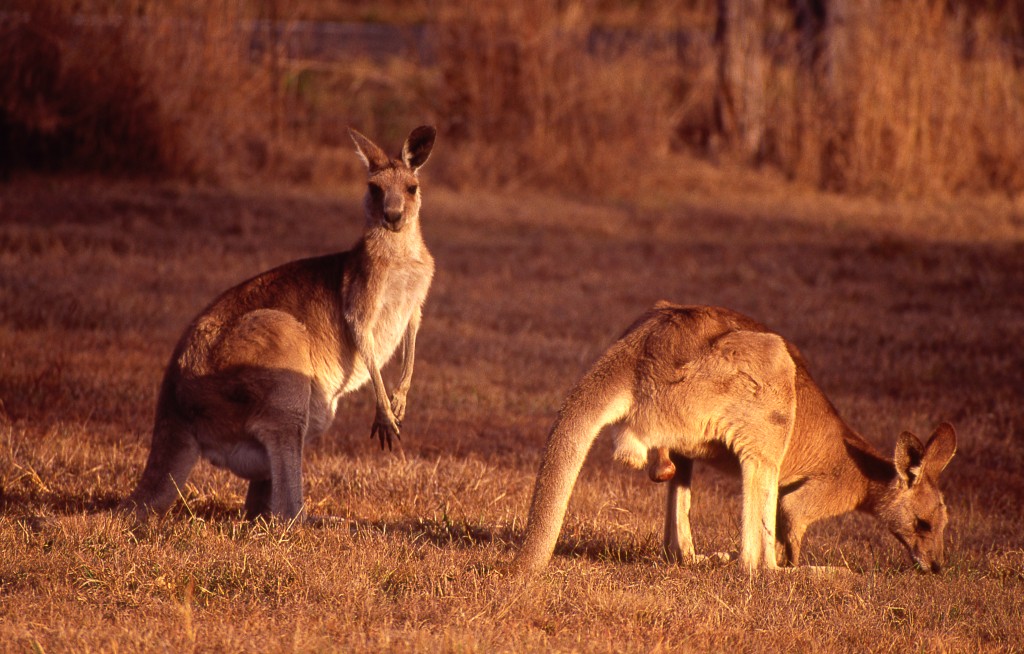
and we could find wildlife not far from our homes ...


2Roos

Its fast disappearing ... So what are we doing to ourselves and for what benefit?

Work colleagues who owned land in the "hinterland" have sold up to developers to turn it all to urban corridor all the way between Brisbane and Southport. Much of this change can be attributed to the growth in population ... but is it good?


Lucky for us others are seeming to ask the same questions.

Monday, 23 November 2009

Environmental Science (or is it yet a science?)

one of the things which bothers me is the state of the situation in Environmental Science. All too often this subject is dragged into disrepute by people who are either complete fruit cakes (and whom seem to barely grasp the basic ideas of science) or is bound and gagged to be used as a political tool. Sometimes both occur.

As I was writing this blog idea it seems that some other people are also working in quite a different way to me to draw public attention to the short comings of the science involved in the climate change issue.

As I've mentioned before I am still unclear on the issues and facts that surround global warming, however something which I am more clear on is the effects of over development. It seems to me that this entire "Climate Change" debate is overshadowing this sort of more practical discussion.

For instance ... back in 2002 ~ 2003 the city of the Gold Coast was running critically close to the limits of its water supply. Below is some data which was sourced from the GCCC website that monitors the Hinze Dam Levels. I have added 2 ellipses to this which I will discuss in a moment. I would like to give you the link (which is here), but this data is no longer published on the GCCC website as it once was, only the less meaningful data of 'consumption'. I'm sure many Gold Coast residents are familiar with this graph...


missingWetSeason

The red line in the graph tracks the dam level as a percentage, my blue ellipse shows the period of January through March which is normally the wet season for this region. As is clear from the graph the dam levels fell to less than 30% capacity just prior to the onset of the (slightly late) wet season of 2003.

Clearly this was quite a worrying time for both residents and council.

During this time a contracting company was employed to reassess the yields of the dam system. The consultant presented the (quite reasonable) proposition that Estimation by Historical Simulation was an appropriate methodology. They proposed a method of analysis which looked at remainders after periods (rather than something state over time). The decided on the simple formula of:

Storage at End of Period = Storage at Beginning + Inflow - Losses

Sounds reasonable but ignores an important point which I'll come to later, additionally it has another strange view ... in determining the Inflow they presented the following model to Council and members of the public:

estimations-fig1

some interesting issues arise from examining this data:
  • Why was a 5 year period used? (to iron out the wrinkles?? of high and low)
  • Why were periods ending in March chosen? (ending in the end of the wet season on a 5 yearly period?? like what difference would it make {my calculations show nil})

Notice the word Average in the above data chart? Now the definition of average is to add up a series and divide by the number of elements in that series.

I attempted to validate their data so using data sourced from the Rainman application (the same source as them, Bureau of Metorology) I obtain a almost identical result taking periods ending December and over a 5 year period (60 months) but not dividing by five.

rolling60

So it appears that this data is obtained by taking the sum of the 60 months and not an average. If we then divide that data by 5 to form an average we find that the scale on the graph now comes much closer to that we expect from yearly rainfall data.

rolling60+yearlySum

One can only hope that this was never used for real calculations on expected inputs to the system ... although I suppose it may have been. If it was not, then what is the purpose of this data? I can only surmise that the Ronald Coase "adage" was used in the construction of this
torture the data long enough, it will confess

Does this mean that figures between 6,000 and 8000 were used?

It is interesting to note that the peak lows of average yearly rainfall data fall significantly lower than the values provided by the rolling 60 month average. What is the purpose of this model as when you compare this with the empirical observations in Fig 1 its clear that the usage rates (based on the fall of dam level in the absence of significant rainfall for addition to its level) will not support two consecutive years of low rainfall, something which the above model seems not to yield.

Lets look carefully at the critical period of 2002 ~ 2003, the figure below contains that component in detail.

rolling60-1990-2007

there is nothing to suggest from this model of stream flow *(the blue line, not the yearly totals) that the water supply would be in any more danger of reaching the point of failure to meet community needs than in other years, in fact 1996 looks more threatening to the water situation.

The fact remains however that it was. Given the climate variability I have no idea what this person was trying to do by presenting this. Was it just to show fancy lines and baffle people with bullshit?

Getting back to my important point before, it may just be that their model would be accurate, and at the end of a 5 year period that the dam would have the calculated amount of water in it...

Do you want to go without water for a few weeks waiting for the 5 year average to equalise?

The evidence (based on empirical data of the dam levels in the period 2001 through 2004) demonstrates the shortfalls of this rolling 60 month model in representing available stream flows, and perhaps also suggests that a basic error in calculation (remember the failure to divide by five?) was responsible for over estimation of yields.

Why was this model used? Perhaps because of mis-understandings in its construction? Perhaps these limitations had never become an issue because up until about 2001 (based on my estimates) the population had not reached the carrying capacity of the system and thus tested the validity of the model.

This is the point at which the available water in the environment (using existing water supply paradigms) is less than the demands of the population.


This is represented in the figure above as the point where available water / person reaches the same level as the water extracted per person. Using this model of water sourcing it is clear that population plays an important role in this ...

Since you simply can't get more water than is available, as the population goes up if the amount of water available remains the same then the lines must meet as essentially there is less water available to each person. This is of course why there were water restrictions introduced at that time.

To me this is an example of the inadequate levels of "science" applied in Environmental Science to date.

So, how do we move away from this?

To me the answer is clear, we need to:
  • move to more open and critical appraisal of this branch of knowledge
  • we must clear about what we are doing and why
  • our methods lay open to scrutiny and
  • open meaningful debate encouraged.

I ask can we continue to base the foundations of the planning of our society on models like this? Should we all not have vested interests in and indeed rights in being involved in the decision making process? Are we not living in a society where we have this right?


Until this happens Environmental Science will remain some sort of political tool for the justification of ends based on who yells loudest

"did too"

Saturday, 6 December 2008

goodbye koalas

I read in a recent article in the Australian that the Koala population in south east Queensland has declined some 40%. Politicians seem to be distressed by this. According to that article "It is believed there are less than 20,000 koalas now in the wild in southeast Queensland."

and that some recognition of this being related to urban development

"The State Government will also work with local governments to draft a new local law for development approvals to ensure dogs and koalas are kept apart, with suggestions including kennelling dogs at night, new fencing regulations and no dog provisions in new estates."

Some years ago (around 1995) back in South East Queensland people united against a road development in areas of Koala habitat and at the election ousted the government supporting it.

Its lovely to see such concern for the environment (although it seems likely that some motivation may have come from opportunistic politics).

But soon after that the area seems to have been heavily developed by urban sprawl (perhaps more habitat destroying and threatening than the roads).

Ironically the Koalas would probably be alive today if the road had gone through.

No one seems to want to alter the nature of urban development, despite general agreement that its both costly and increasingly difficult to provide infrastructure to these sprawling urban areas.
So while roads are not allowed to threaten the Koala population that relentless urban development is. So areas just around where I live which were once like this:


are bull dozed over and turned into this:


There are certainly other models of development than this, which if we are to live in the area and not destroy the very reasons we find it beautiful need to be explored.

This will require planning and community involvement. I hope that this can happen so that we don't have to say good bye to both the Koalas and the natural beauty of the region.

Please go visit the Koala Foundation and give Deborah Tabart a hand!

Tuesday, 17 June 2008

India - why all the mess?

I've just come back from India from my second trip, and (again) I feel troubled by what I see there. Pollution is getting worse and poverty seems not to be getting much better.


Walking around is so different to seeing photographs. I just can't convey the stench of the piss soaked walls or the things which wash past you when you walk up a street in the rain.


It seems to be a land of contradiction and contrast. Filled with iconic architectural marvels (like the Taj Mahal), yet immersed in such chaos, environmental disaster, filth and exploitation. I've not personally seen the like of it anywhere in Asia. On this occasion I spent a little time with a woman from Cameroon and she said to me that things were indeed not the same in her country.

People's first response to why its like it is is because of the overpopulation. So, starting with some simplistic comparisons lets compare some European countries with India.

Based on information from the "world fact book" it would seem that "Population Density" of India is not as high as the Netherlands and only a little higher than Germany


NationDensity (persons / Km^2)
India386
The Netherlands490
Germany235

Parts of Sydney, certainly Tokyo and even Helsinki are equally dense in habitation to New Delhi, so just on the surface of it its not looking like that is the main culprit (see here here and here).

I suspect part of the answer lies in India itself. While the elite within India like to entertain notions of National Grandeur (I was stunned to see recent examinations of "will India become a superpower" in the newspapers on this visit), not much seems to have brought to the attention of the upper and middle classes (or should I say castes?) the magnitude of the problems created by the lower classes and poverty.

Part of this thought process started while visiting the Red Fort in Agra, where I found this plaque on the wall.

I read it, and started to wonder if despite all the exploitation of India by the British colonial forces it if was not perhaps the British who had also taken some care and interest in the preservation of India?

I wonder how many of the NGO's who devote time to trying to help the poor and needy in India were started by the British or other foreign powers?

Its an interesting question, and I believe cuts to the root of the problem. No one in India seems to care much about anyone other than themselves (and perhaps their family).

One of my personal yardsticks of civilized behavior is the ability of people to form an orderly queue and wait in turn for some service. Just go to the airport, visit McDonalds or even just go to a shop and there everyone is always pushing their way in or jumping straight to the head of the queue. Not just some people, its most people. Perhaps its because all the "special people" in India are so used to being the only special person that when they are surrounded by them they could not possibly think that there is anyone else less than themselves present? Waiting for a burger at McDonlands in New Delhi the poor clerk had to tell everyone who came up and just shoved money over the top of the counter that he was serving someone, there was a queue and please wait your turn for service. Seemed to ruffle up the feathers of some high class people every time.

Drive around for a while and its the same on the roads, no one seems to give the least regard for things like lanes, roundabout directions (or even road driving direction for that matter) or overloading unsafely. Its like no one else matters.

This "I'm the VIP here" attitude got one fellow at the airport on our way out of New Delhi into an argument with the armed Indian Army Sergeant on duty at the security check. The guy tried to push his way though another person just getting onto the metal scanner and then started talking down to the guard when he was told to go back. Its hard to fathom.

Meanwhile whether it be the poverty, the lack of education, the lack of resources or just the lack of interest sees Indian rivers (and streets) choked with pollution, human excrement, rotting food and plastic bags.

Its almost like its assumed to be filthy outside (where the common people and animals live) and no one seems to even notice it, much less care.


I only hope that in their race to be a proud world super power that it is not these Indians who suffer the most.


I've been suggested this reading by Milton Friedman to help explain the economic basis to the problems. For example this poignant quote:

...though the number of tourists entering India in recent years has been growing, the amoun recorded in official statistics as spent by tourists has been declining.

Reminds me of the "receipt" we got for our meals at one of the hotel. I just felt for sure that it was going straight into some ones pocket.

or:

The current danger is that India will stretch into centuries what took other countries only decades.

The authors final summary was not highly optimistic (although written in the 1960's).

It will, I fear, take a major political or economic crisis to produce a substantial change in the course on which India is now set in economic policy, and I am not at all optimistic that such a crisis if it occurs, will produce a shift toward

I hope not ... although I think the document makes quite a compelling argument. I wonder how much it explains the other social interaction issues. While I was there this time there was an ongoing dispute between people in Rajastan (called Gujjars) and the central government in New Delhi. This seems to have escalated into road blocks and train derailments ... next thing they'll label them terrorists and crack down heavily on them.

Time for my last quote from Friedman:

"The British left parliamentary democracy and respect for civil rights as a very real heritage to India.Though I very much fear that this heritage is being undermined and weakened..."

Amazingly an article in The Times of India ("Green cover up, says CM on Environment Day "friday, June 6 p9) speaks of Delhi being one of the Greenest Capitals in the world. What a laugh! Its been said that there are Lies, Bloody Lies, Statistics and Maps ... this is surely a Statistics application of the truth!

The future will make it clearer I suppose.