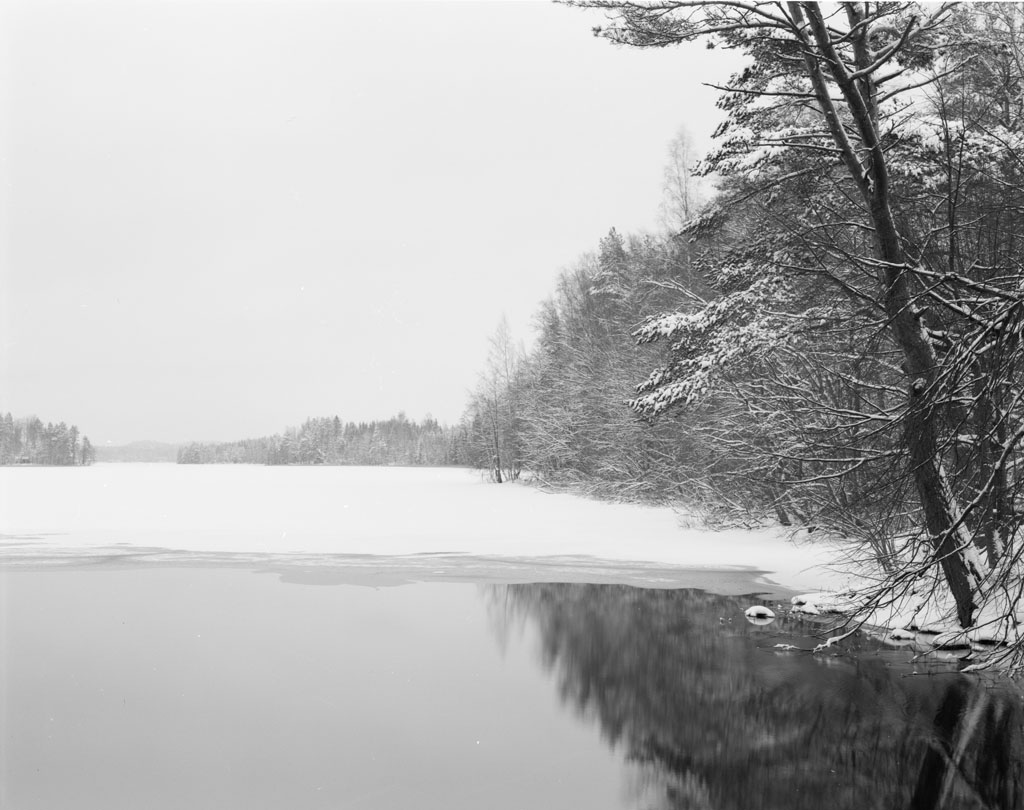
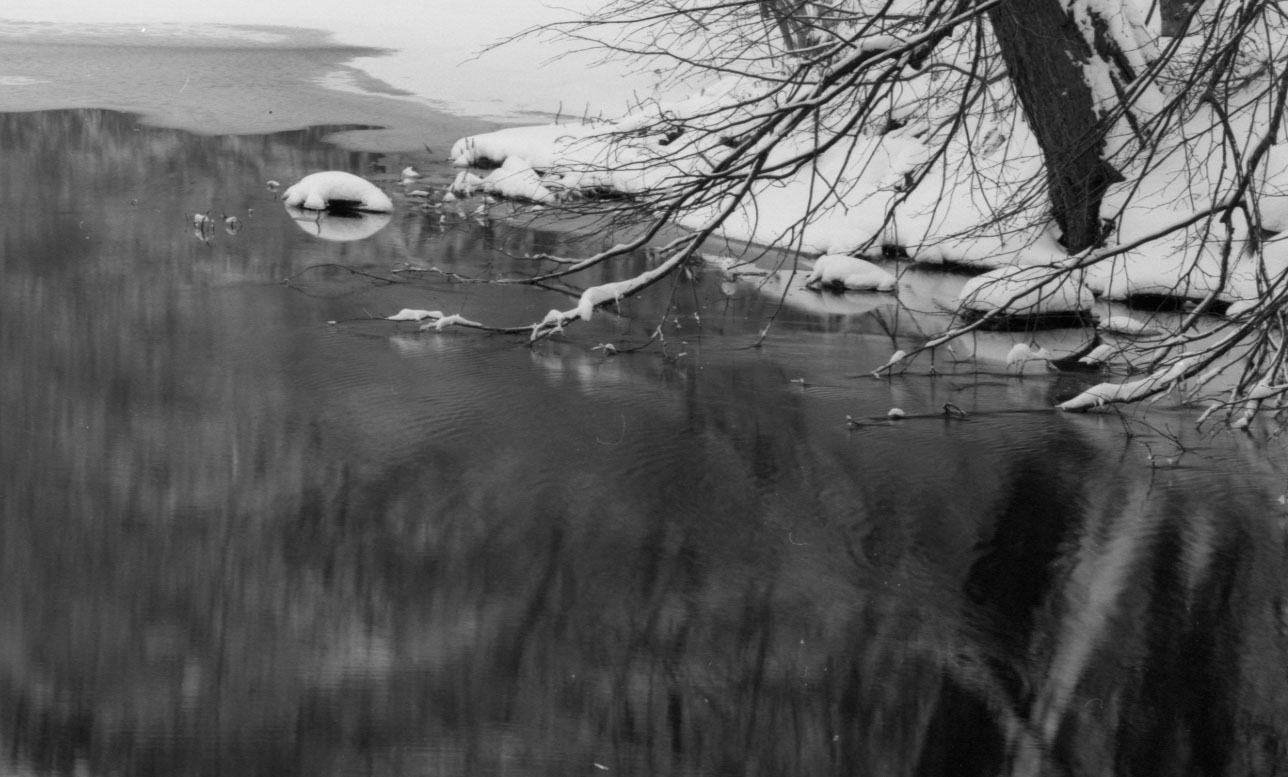
yesterday was a lovely day out on the lake ... as an Australian I never quite loose the magic feeling (and slight apprehension) of walking straight off the shore and over to an island.
This was taken with my FD200 which was a wee bit too telephoto, so to get the angle I wanted I stitched 2 images together and voilla ... higher res version of what I'd get with a 100mm lens.
Oh, and the ice was thick and movement (combined with lack of snow) is showing the cracks too.
:-)
Sunday, 30 March 2014
Friday, 28 March 2014
shallow portrait lenses 43rds vs Full Frame (part 2)
Way back in 2011 I wrote a post about comparing portrait length lenses on micro 4/3 vs full frame. I had always meant to do a part two of that article, but things got in the way of that (as my friends will attest).
So with the excuses out of the way I have felt moved to make the second part of that comparison because the topic still seems quite interesting to people. I see on a board that I follow that people are interested in comparisons between the Nocticron on a micro4/3 and a cheaper Full Frame system, which is more or less quite related to what I did back in 2011. To sum up the points I made back there I felt that the evidence I found supported:
To recap:
The image from the Olympus 100mm at 2.8

and then the 4/3 camera with the 50mm at 1.4

Stopping the 50mm f1.4 down to f2.8 we find it to be more or less equal to the contrast of the Olympus 100mm lens at f2.8.

but of course with much increased DoF (as expected).
Which brings me to observe that so far it is my experience that simmilar F-stop numbers produce similar contrast. Personally I find the 50mm @ f1.4 to be too milky and too soft. The close examinations in that article show that flare and reduction of contrast are the culprits.
However back in that article I wrote that it would be interesting to compare the new Oly 45 f1.8 ... let me quote:
Perhaps the new Olympus 45 f1.8 lens would solve these problems and yield a lens which would

Since the Oly is a 45mm not a 50mm, you will need to get closer to the subject as there is a significant difference between 45mm and 50mm. It may work out near enough, but I suspect that you'll get a tighter DoF out of a 100mm lens on full fame than even the Oly45mm f1.8 simply because I got exactly that when comparing the 50 and the 100.

With both images I tried to focus on the back edge of the cap. Using the magnify zoom focus assist on the GH1 it was easy to get that spot. Looking carefully its clear that the 50mm lens on the 4/3 the focus zone is much deeper even at f1.4. By the distance from the ear to the eyelashes, they are starting to go out of focus on the 100mm at f2.8 but not on the 50mm at f1.4. This means also that you won't get that on the Olympus 45 f1.8 either.
I have a couple of things I wanted to show, first is the differences in more detail between the two images in two ways:
So at the same diameter
and next at the same aperture:
I notice two things seem related at different settings:
Contrast at fstop and Depth of Field at aperture diameter.
I see that at the same F number the contrast levels are almost the same and yet the background Depth of Field is deeper (IE more focused). I'm not sure if this transfers to other lenses or if its just here.
Ok, the next thing I noticed in panning around the images was how much better (cleaner) the 5D image was to the GH1.
As you (should) know, both these cameras use a typical Bayer Array, which contains 2 times as many Green pixels as it does Red or Blue. There is no actual RGB pixel, this is constructed during 'demosiacing' from the R G and B pixels found in the Bayer array (as in figure to the left). There are of course various algorithms for this each with various advantages.
This has the basic effect however of making the Green channel much stronger (less noise) than any other channels. If you have not done this before I suggest you load any image into Photoshop and look at each of the colour channels. Of course if you have a foveon sensor camera, where you will not see such differences in RGB ...
This noise does make a difference on a print, especially if you print large. Some years ago (before blogs existed) I wrote a post on my observations of this here as well as some other observations on channel noise differences between JPG and RAW here. While the focus of those articles is not the same as here, there is some overlapping information of relevance.
So, starting again with the same diameter (to keep same DoF) and looking at the Red Channel from the images (converted as 16bit TIF) we see this:
And the levels of detail in the darkness of the red are dreadful on the GH1 while allso the hightlights are blown to saturation too.
Now, lets look at the images obtained with the same F-Number (and of course the shutter speed was slowed by 2 stops as the aperture was brought down too):
We now have a much happier comparison between the two images, although still the GH1 has a bit more noise than the 5D, its a lot better than it was at f1.4, which is curious.
To compare the other channels I have put together this pair of animated GIF files cycling through the images:
Colour - R - G - B
5D
GH1
So its pretty clear that the GH1 files do not have the same capacity to be free from noise or saturation as the 5D does. This of course will be noticeable as a grubby noise in the shadows when comparing the two, or a softness (as all current noise reduction algorithms I've seen produce).
I would love to make this comparison with a newer lens like the Olympus 45mm f1.8 to see if it does a better job of the contrast.
5D @f2.8
its red channel
which isn't too bad really.
Then to the GH1 @f1.4
its red channel
same mushy shadows as I obtained with RAW processing, perhaps worse.
So in my view, even the marvels of in-camera processing just make it clear that working in RAW has been a benefit to the Panasonic.
Does this mean I'll be ditching my 5D? Well no, while I hate it for being a fat slug it produces good images. Fat slug you say? Ok, lets look at a few images.
This is my 5D:
and from exactly the same location (the camera that took the pictures was on a tripod, it didn't move and it was using a manual focus lens which I also didn't move) my
EOS 630 film camera:
Did you notice how much more blob there is in front of the camera and how much more bulk there is behind the film plane (yellow line)? Yet the 630 gives me shit-hot fast AF, fast 5 frames per second motor drive (twice the speed of the 5D) and lasts about a year of shooting on a single battery (well ok, you need to feed it film too). Its lighter than the 5D and almost as convenient to carry as my GH1 is really.
I happen to like digital cameras but dislike DSLR cameras for their bulk. I hate how fat DSLR cameras are in comparison to 35mm film cameras. Of course the new Sony a7 seems to have solved that problem.
Below is the crew of cameras used in making this post (obviously not taken with any of these cameras):
When going on holiday just walking around I'm far more likely to have my GH1 with me than a 5D. (In fact I'll probably take the 630 along because I prefer the way negative reacts when shooting in harsh light). However when I'm shooting an important event like a wedding I'll be sure to be taking along a Full Frame camera like the 5D.
Also the GH1 (by being a smaller 4/3 format) allows me to make better use of my telephoto lenses, or even own telephoto lenses which I could not make use of before (such as my FD200mm f4 which only weighs 440g and is really cheap as it won't fit on any DLSR).
In the end to answer the question I posed in the opening of the first post (you remember that one, back here), while its close, the cameras are not fully "fungible" ... each has distinct differences, each brings something different to the table.
To quote an old saying: if all you have is a hammer, everything looks like a nail. So by having both full frame and 35mm (well and large format too) and understanding the differences, I can pick which tool is right for the job.
:-)
So with the excuses out of the way I have felt moved to make the second part of that comparison because the topic still seems quite interesting to people. I see on a board that I follow that people are interested in comparisons between the Nocticron on a micro4/3 and a cheaper Full Frame system, which is more or less quite related to what I did back in 2011. To sum up the points I made back there I felt that the evidence I found supported:
- there is a essentially two stops difference between 4/3 and Full frame to get the same Depth of Field.
- that there were significant contrast differences between a 50mm @ f1.4 on a 4/3 and a 100mm @ f2.8 on a full frame
- that the Canon 5D Mk1 had a better detail than the GH1
- that there was better highlight and shadow details in the 5D than the GH1
To recap:
The image from the Olympus 100mm at 2.8

and then the 4/3 camera with the 50mm at 1.4

Stopping the 50mm f1.4 down to f2.8 we find it to be more or less equal to the contrast of the Olympus 100mm lens at f2.8.

but of course with much increased DoF (as expected).
Which brings me to observe that so far it is my experience that simmilar F-stop numbers produce similar contrast. Personally I find the 50mm @ f1.4 to be too milky and too soft. The close examinations in that article show that flare and reduction of contrast are the culprits.
However back in that article I wrote that it would be interesting to compare the new Oly 45 f1.8 ... let me quote:
Perhaps the new Olympus 45 f1.8 lens would solve these problems and yield a lens which would
- have the contrast I find in the Olympus 100 f2.8 on full frame,
- have at least similar (if not better) sharpness
- be more compact and light weight than the FD f1.4
Since the Oly is a 45mm not a 50mm, you will need to get closer to the subject as there is a significant difference between 45mm and 50mm. It may work out near enough, but I suspect that you'll get a tighter DoF out of a 100mm lens on full fame than even the Oly45mm f1.8 simply because I got exactly that when comparing the 50 and the 100.

With both images I tried to focus on the back edge of the cap. Using the magnify zoom focus assist on the GH1 it was easy to get that spot. Looking carefully its clear that the 50mm lens on the 4/3 the focus zone is much deeper even at f1.4. By the distance from the ear to the eyelashes, they are starting to go out of focus on the 100mm at f2.8 but not on the 50mm at f1.4. This means also that you won't get that on the Olympus 45 f1.8 either.
The New Material
I have a couple of things I wanted to show, first is the differences in more detail between the two images in two ways:
- same diameter aperture
- same f-stop aperture
So at the same diameter
and next at the same aperture:
I notice two things seem related at different settings:
Contrast at fstop and Depth of Field at aperture diameter.
I see that at the same F number the contrast levels are almost the same and yet the background Depth of Field is deeper (IE more focused). I'm not sure if this transfers to other lenses or if its just here.
Ok, the next thing I noticed in panning around the images was how much better (cleaner) the 5D image was to the GH1.
Noise
Back in that earlier article I observed that the 5D held shadows and highlights better than the GH1 did. I am sure that this is going to be the case across all the micro4/3 but would love to actually see results (not just fanboyism). In that comparison I used ACR to do my conversions, and still noticed some differences. The other day I used DCRAW to do the conversion because I wanted to see what was actually in the RAW files, not what cunning reconstructions that Adobe can do (which they do so well).As you (should) know, both these cameras use a typical Bayer Array, which contains 2 times as many Green pixels as it does Red or Blue. There is no actual RGB pixel, this is constructed during 'demosiacing' from the R G and B pixels found in the Bayer array (as in figure to the left). There are of course various algorithms for this each with various advantages.
This has the basic effect however of making the Green channel much stronger (less noise) than any other channels. If you have not done this before I suggest you load any image into Photoshop and look at each of the colour channels. Of course if you have a foveon sensor camera, where you will not see such differences in RGB ...
This noise does make a difference on a print, especially if you print large. Some years ago (before blogs existed) I wrote a post on my observations of this here as well as some other observations on channel noise differences between JPG and RAW here. While the focus of those articles is not the same as here, there is some overlapping information of relevance.
So, starting again with the same diameter (to keep same DoF) and looking at the Red Channel from the images (converted as 16bit TIF) we see this:
And the levels of detail in the darkness of the red are dreadful on the GH1 while allso the hightlights are blown to saturation too.
Now, lets look at the images obtained with the same F-Number (and of course the shutter speed was slowed by 2 stops as the aperture was brought down too):
We now have a much happier comparison between the two images, although still the GH1 has a bit more noise than the 5D, its a lot better than it was at f1.4, which is curious.
To compare the other channels I have put together this pair of animated GIF files cycling through the images:
Colour - R - G - B
5D
GH1
So its pretty clear that the GH1 files do not have the same capacity to be free from noise or saturation as the 5D does. This of course will be noticeable as a grubby noise in the shadows when comparing the two, or a softness (as all current noise reduction algorithms I've seen produce).
I would love to make this comparison with a newer lens like the Olympus 45mm f1.8 to see if it does a better job of the contrast.
the JPG versions
I realise that some people are JPG only shooters, so I thought I should include the JPG's that came from the cameras. These were both with settings as "standard" as possible.5D @f2.8
its red channel
which isn't too bad really.
Then to the GH1 @f1.4
its red channel
same mushy shadows as I obtained with RAW processing, perhaps worse.
So in my view, even the marvels of in-camera processing just make it clear that working in RAW has been a benefit to the Panasonic.
Thoughts
Does this mean I don't like my GH1? Not at all, its still exactly the camera I wanted it to be. Its light, it does great video and takes a host of lenses. I love it. All this means to me is that I'm more aware of the actual differences that will result in use between the cameras.Does this mean I'll be ditching my 5D? Well no, while I hate it for being a fat slug it produces good images. Fat slug you say? Ok, lets look at a few images.
This is my 5D:
and from exactly the same location (the camera that took the pictures was on a tripod, it didn't move and it was using a manual focus lens which I also didn't move) my
EOS 630 film camera:
Did you notice how much more blob there is in front of the camera and how much more bulk there is behind the film plane (yellow line)? Yet the 630 gives me shit-hot fast AF, fast 5 frames per second motor drive (twice the speed of the 5D) and lasts about a year of shooting on a single battery (well ok, you need to feed it film too). Its lighter than the 5D and almost as convenient to carry as my GH1 is really.
I happen to like digital cameras but dislike DSLR cameras for their bulk. I hate how fat DSLR cameras are in comparison to 35mm film cameras. Of course the new Sony a7 seems to have solved that problem.
Below is the crew of cameras used in making this post (obviously not taken with any of these cameras):
When going on holiday just walking around I'm far more likely to have my GH1 with me than a 5D. (In fact I'll probably take the 630 along because I prefer the way negative reacts when shooting in harsh light). However when I'm shooting an important event like a wedding I'll be sure to be taking along a Full Frame camera like the 5D.
Also the GH1 (by being a smaller 4/3 format) allows me to make better use of my telephoto lenses, or even own telephoto lenses which I could not make use of before (such as my FD200mm f4 which only weighs 440g and is really cheap as it won't fit on any DLSR).
In the end to answer the question I posed in the opening of the first post (you remember that one, back here), while its close, the cameras are not fully "fungible" ... each has distinct differences, each brings something different to the table.
To quote an old saying: if all you have is a hammer, everything looks like a nail. So by having both full frame and 35mm (well and large format too) and understanding the differences, I can pick which tool is right for the job.
:-)
Monday, 24 March 2014
In pursuit of riches
Lately my life has been about enriching myself. Trying to find my spirit again and perhaps seeing if I can grasp hers.
My monthly migration takes me past this creek. I spent a little time down there today on the way back to the train, just reflecting and admiring the beauty of the spring transformation.
For sure you don't get this sitting in an office. Makes me wish I'd brought my sound recorder, as the bird sounds were nice too.
enjoy
My monthly migration takes me past this creek. I spent a little time down there today on the way back to the train, just reflecting and admiring the beauty of the spring transformation.
For sure you don't get this sitting in an office. Makes me wish I'd brought my sound recorder, as the bird sounds were nice too.
enjoy
Sunday, 23 March 2014
Gearing towards a photographic vision
this is just a general ramble (well which of my posts aren't?) about photography, creating images and the gear we use. It was inspired by a post on a friends blog over here. I thought his post and his reflections served as a good rumination for all photographers asking themselves "why".
One of the things which many photographers do is buy gear. There are often many reasons for buying gear, such as wanting something new or hoping to get better images. Often its a lust for the expensive , exotic or unattainable.
Strangely few seem to consider themselves as a key component in making the image. Its like the classic insult of telling a woman she has a good oven because her baking is good.
The image here is taken with my Toho 4x5 camera one still and cold winter day in Finland. Click it to load a larger preview (or 'middle button' click it should load that into a new window. There is nothing magical or high tech about the Toho, its it's just a box to hold the (sheet 4x5) film. The lens is a simple 180mm standard lens. Nothing exotic, no super fast aperture.
The image happily supports a scan of 3000dpi or 15,000 x 12,000 pixels or about 180Megapixels. To be honest I don't think that any digital camera at any price will make a significantly superior image. I'll plop below a segment (lower left) of scan taken some time ago with my Epson 3200 scanner at 1200dpi. That scanner is not 'top shelf' and issues like focus prevent it getting the full detail out of the image.
Back when I took this shot (oh, around 2009) there just wasn't anything around at all in the digital realm which would do better, perhaps there still isn't. Something like this will cost you less than 1/3 the cost of a full frame DSLR body.
While its possible that the top shelf full frame DSLR cameras will go really close to this film image (and at what cost), to get such an image you'll need to dedicate yourself to using a good solid tripod be sure to focus critically and have a really top shelf lens. (Yet the lens I took that shot with cost about US$200 which is one of the advantages in having a bigger capture area).
My point here is to remind people that if you want to get high resolution images then just buying the right gear is not enough. Sony a7 alone is not going to do it, you'll have to work for it yourself too.
More years ago than I would like to admit to I read this book on high resolution image making, I still recommend it. Sure, some of the parts about film development are no longer relevant, but the aspects of camera and lens still are. If you are interested in learning about making your images clear and sharp then that's a good book IMO.
For myself if I'm going to struggle around with a tripod then putting a camera up and carefully focusing it (remember it has to be focused well too) then it just seems like a let down if all I do is click and then have to pull it all down again. Its kind of like going to all the trouble to court a lovely lady, take her out to dinner and then fall asleep after a quick hump.
Micro4/3 for instance is great as its light, its compact, has more than sufficient resolution and has interchangable lens capability.
Image resolution is not top shelf but if I'm hand holding the camera then its likely I'm not going to get a 24Megapixel image (even if I have a 24 megapixel sensor and a lens which can deliver that result too).
For sure the micro4/3 camera will not give you the same IQ results as a Sony a7 or a Canon or Nikon full frame camera at maximum enlargements, but if you're hand holding maybe its true that you won't get the difference either.
Not to mention that focus accuracy may actually make the DSLR image of lower quality (see back focus / front focus which drove me nuts with my DSLR cameras). Ironically enough I went to Micro4/3 because I wanted to get sharper images (because out of focus is not sharp). So why carry around a lump of a camera and a triod when you're not going to take the time anyway?

Sure, you may not need many lenses, you can go get a 12-40mm zoom and then a 45-200 zoom and have the whole range covered, but will you actually get:
For instance I love experimenting with lenses to get a look I like, I also like to be in control. So naturally I like manual focus lenses. Last weekend I was at the funeral for my wifes grandmother (rest her soul) and of the many good images I took, I took this image with my GH1 and the Pentax 110 70mm f2.8 lens.
The background is rendered a little out of focus which gives it nice concentration on the subject. If I had used a modern zoom it would probably have been f5.6 and the background would have been much sharper and more distracting.
Of course I could have spend nearly a thousand dollars on a new Oly 75mm f1.8, but would it have been any sharper? One can see that its actually quite sharp (again, click for larger).
Not bad for an old $50 lens hand held.
My point here is that for people who actually want to make images that acquiring the gear (yes I have GAS) should be guided by selecting something beneficial and something which will actually help you along on your journey of making images (and learning about photography). Unless you collect gear for the sake of collecting gear (not a bad hobby by the way), understanding the why and how will guide you into developing an eye into what you buy.
Having said that, equally just picking up a an outlandish bargain can prove educational in just playing with something fun.
Good images are ones you like, its important to see that and important to learn about what the tools do to enable you to make that photographic vision leap out. Its not about "full frame" (unless you have a specific reason) or about adding more megapixels or having a "all in one zoom". Its about getting images that make you happy and develop your photographic spirit.
The wonderful things about right now in photography is there are oodles of choices in gear available without spending a fortune and dabbling and learning will enrich your life for not a lot of money.
Pentax 110 50mm f2.8 lens on GF1
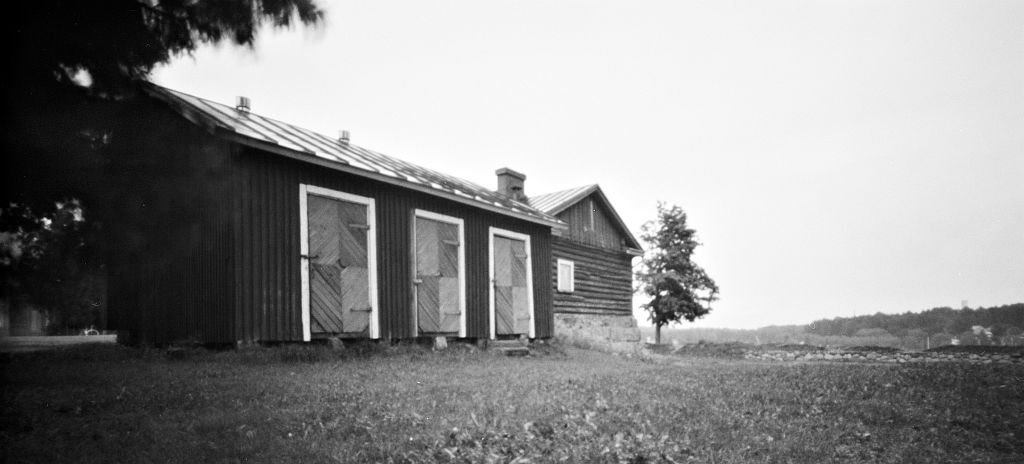
Holga plastic pinhole camera 120 Roll film
12mm Computar f1.3 TV lens on G1
90mm Fujinon on 6x12 roll film
So go out and have fun with your camera! (don't just sit around looking at camera gear)
One of the things which many photographers do is buy gear. There are often many reasons for buying gear, such as wanting something new or hoping to get better images. Often its a lust for the expensive , exotic or unattainable.
Strangely few seem to consider themselves as a key component in making the image. Its like the classic insult of telling a woman she has a good oven because her baking is good.
The image here is taken with my Toho 4x5 camera one still and cold winter day in Finland. Click it to load a larger preview (or 'middle button' click it should load that into a new window. There is nothing magical or high tech about the Toho, its it's just a box to hold the (sheet 4x5) film. The lens is a simple 180mm standard lens. Nothing exotic, no super fast aperture.
The image happily supports a scan of 3000dpi or 15,000 x 12,000 pixels or about 180Megapixels. To be honest I don't think that any digital camera at any price will make a significantly superior image. I'll plop below a segment (lower left) of scan taken some time ago with my Epson 3200 scanner at 1200dpi. That scanner is not 'top shelf' and issues like focus prevent it getting the full detail out of the image.
Back when I took this shot (oh, around 2009) there just wasn't anything around at all in the digital realm which would do better, perhaps there still isn't. Something like this will cost you less than 1/3 the cost of a full frame DSLR body.
Pursuit of IQ
Something which people often forget (and is part of the reason why I don't have 'big gun digital') is that if you want high resolution images you have to work for it.While its possible that the top shelf full frame DSLR cameras will go really close to this film image (and at what cost), to get such an image you'll need to dedicate yourself to using a good solid tripod be sure to focus critically and have a really top shelf lens. (Yet the lens I took that shot with cost about US$200 which is one of the advantages in having a bigger capture area).
My point here is to remind people that if you want to get high resolution images then just buying the right gear is not enough. Sony a7 alone is not going to do it, you'll have to work for it yourself too.
More years ago than I would like to admit to I read this book on high resolution image making, I still recommend it. Sure, some of the parts about film development are no longer relevant, but the aspects of camera and lens still are. If you are interested in learning about making your images clear and sharp then that's a good book IMO.
For myself if I'm going to struggle around with a tripod then putting a camera up and carefully focusing it (remember it has to be focused well too) then it just seems like a let down if all I do is click and then have to pull it all down again. Its kind of like going to all the trouble to court a lovely lady, take her out to dinner and then fall asleep after a quick hump.
Opportunity not missed
Now I don't always want to drag along a tripod for every image, and so it is for this reason that I love having appropriate cameras for the job.Micro4/3 for instance is great as its light, its compact, has more than sufficient resolution and has interchangable lens capability.
Image resolution is not top shelf but if I'm hand holding the camera then its likely I'm not going to get a 24Megapixel image (even if I have a 24 megapixel sensor and a lens which can deliver that result too).
For sure the micro4/3 camera will not give you the same IQ results as a Sony a7 or a Canon or Nikon full frame camera at maximum enlargements, but if you're hand holding maybe its true that you won't get the difference either.
Not to mention that focus accuracy may actually make the DSLR image of lower quality (see back focus / front focus which drove me nuts with my DSLR cameras). Ironically enough I went to Micro4/3 because I wanted to get sharper images (because out of focus is not sharp). So why carry around a lump of a camera and a triod when you're not going to take the time anyway?

True flexibility predates "systems"
Which leads me to lenses. One of the really nice features of micro4/3 (well and the NEX cameras which also have short focal flange distance) is that you can get some great lenses for not much money which can give you the opportunity learn. This is because not only can you take advantage of what your maker provides, but what almost every other maker provides. Systems are intended to lock you in to their stable.Sure, you may not need many lenses, you can go get a 12-40mm zoom and then a 45-200 zoom and have the whole range covered, but will you actually get:
- shallow DoF with those?
- better Bokeh?
- better value for money?
- better photographs?
- learn about photographic vision?
For instance I love experimenting with lenses to get a look I like, I also like to be in control. So naturally I like manual focus lenses. Last weekend I was at the funeral for my wifes grandmother (rest her soul) and of the many good images I took, I took this image with my GH1 and the Pentax 110 70mm f2.8 lens.
The background is rendered a little out of focus which gives it nice concentration on the subject. If I had used a modern zoom it would probably have been f5.6 and the background would have been much sharper and more distracting.
Of course I could have spend nearly a thousand dollars on a new Oly 75mm f1.8, but would it have been any sharper? One can see that its actually quite sharp (again, click for larger).
Not bad for an old $50 lens hand held.
My point here is that for people who actually want to make images that acquiring the gear (yes I have GAS) should be guided by selecting something beneficial and something which will actually help you along on your journey of making images (and learning about photography). Unless you collect gear for the sake of collecting gear (not a bad hobby by the way), understanding the why and how will guide you into developing an eye into what you buy.
Having said that, equally just picking up a an outlandish bargain can prove educational in just playing with something fun.
Good images are ones you like, its important to see that and important to learn about what the tools do to enable you to make that photographic vision leap out. Its not about "full frame" (unless you have a specific reason) or about adding more megapixels or having a "all in one zoom". Its about getting images that make you happy and develop your photographic spirit.
The wonderful things about right now in photography is there are oodles of choices in gear available without spending a fortune and dabbling and learning will enrich your life for not a lot of money.
Some food for thought
Pentax 110 50mm f2.8 lens on GF1
Holga plastic pinhole camera 120 Roll film
12mm Computar f1.3 TV lens on G1
90mm Fujinon on 6x12 roll film
So go out and have fun with your camera! (don't just sit around looking at camera gear)
Subscribe to:
Posts (Atom)